Willem de Sitter was not just a name in a textbook. He was a Dutch mathematician and astronomer who helped turn Albert Einstein’s abstract equations into a physical reality. Born in Sneek on May 6, 1872, he died in Leiden on November 20, 1934, but his impact on cosmology lasted much longer.
His journey started at the State University of Groningen. He studied mathematics there, but it was under J.C. Kapteyn’s guidance at the astronomical laboratory that he found his true calling. He liked astronomy. It clicked. He spent two years, from 1897 to 1899, working at the Cape Observatory in South Africa. That experience stuck. He devoted himself to the stars after that.
By 108, he was a professor of astronomy at the University of Leiden. By 1919, he was the director of the Leiden Observatory. But his real contribution came from a mix of celestial mechanics and theoretical physics.
How De Sitter Sparked British Interest in Relativity
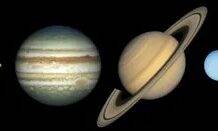
In his early career, de Sitter looked at Jupiter’s four great Galilean satellites. He analyzed their motions to determine their masses. It was detailed, ground-level work. But it gave him the tools for something bigger.
In 1916 and 1917, he published a series of papers in London. These papers described the astronomical consequences of Einstein’s general theory of relativity. Einstein had just released the theory. It was complex. It was controversial. De Sitter explained it. He made it visible.
His work aroused British interest in the theory. It led directly to something historic. Arthur Eddington’s 1919 expedition to observe a solar eclipse. Eddington wanted to measure the gravitational deflection of light rays passing near the Sun. De Sitter’s earlier papers helped pave the way for that specific test. Without that theoretical groundwork, the eclipse observation might not have been prioritized or interpreted the same way.
Why the Expanding Universe Matters
Here is where de Sitter’s concept of the universe differed from Einstein’s. This is a key point for anyone interested in the history of science.
Einstein’s relativistic conception of curved space led him to envision the universe as static. Unchanging in size. He needed a stable model. De Sitter looked at the same math and saw something else. He maintained that relativity actually implied that the universe was constantly expanding.
This view was radical at the time. It contradicted the prevailing notion of a static cosmos. But it was right. Edwin Hubble’s observations of distant galaxies later supported de Sitter’s hypothesis. Hubble saw the redshift. He saw the distance. The universe was moving apart.
Einstein eventually adopted de Sitter’s view. He had to. The evidence was too strong.
Where De Sitter Got It Wrong
De Sitter’s calculations were not perfect. His estimates of the size of the universe were too small. So were his calculations of the number of galaxies contained within it. The universe is vastly larger and more populous than he predicted.
But his theoretical insight was spot on. He understood the dynamic nature of spacetime before the observational