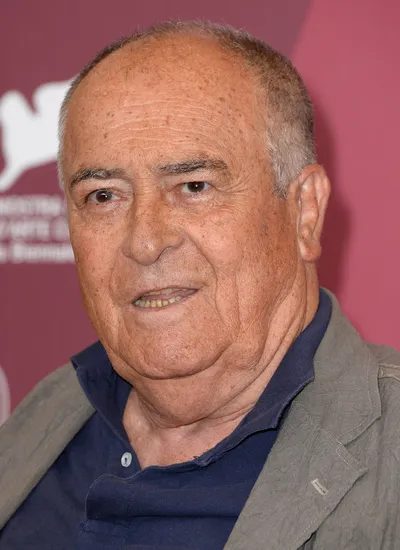
The name Bernardo Bertolucci continues to play an important role in the history of cinema. He was born in Parma on March 16, 1941 and died in Rome on November 26, 2018. He was more than just an Italian director. He is a provocateur. Storyteller. Someone observed the human condition and decided to film it raw.
If you know one thing about him, it’s probably “Last Tango in Paris.”
The 1972 film didn’t just break box office records;
It breaks cultural taboos.
Its sexual content caused international outrage and praise in equal measure. But to understand how he did it, we have to look back at his life before that.
A Literary Upbringing
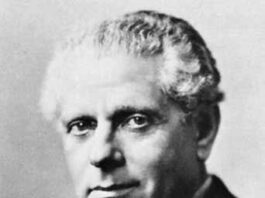
Bertolucci’s entry into the film industry was no accident. He was raised in a comfortable atmosphere and with high intelligence. His father was a writer, poet, anthologist, art history teacher and film critic. This person had a big impact early on.
Young Bernardo’s love of movies was not a sign of teenage rebellion. This is everyday. He often attended shows with his father. He was fascinated by cameras early on. At the age of 15, he had already made two short films about children. He didn’t just watch. that’s what he does.
His literary talent was equally adept. In 1962, he published the work “In cerca del mistero” (“In search of a mystery”). This book won the Viareggio Prize, one of Italy’s most prestigious literary awards. This is not a hobby project. This is a great literary achievement.
Exit Academia and head to the camera
After achieving early success, he entered the film industry. He initially worked as an assistant director for Pier Paolo Pasolini. This is formative time. Bertolucci worked on Pasolini’s 1961 film Accattone.
Around the same time, he made a fateful choice. He left his studies at the University of Rome without graduating. No degree. This is an independent and thorough study of film theory and practice. He is on an independent path.
His first feature film was released in 1962. La commare secca (“The Grim Reaper”) was shot in Rome. Critics saw a promising young director emerging from the shadows. Audiences stayed away. It was a commercial failure.
Two years later, in 1964, he released Prima della rivoluzione (Before the Revolution). The commercial performance was identical. However, it caught the attention of the Cannes Film Festival. Recognition without revenue. This is a familiar story from independent film, but one that defined the early stages of his career.
Long road to maturity
His vision was difficult to realize financially. So he adapted. He directed documentaries. He has collaborated with Julian Beck and Living Theater on works such as Agonia (‘Agony’) and Amore e rabbia (Love and Rage ).
These years have not been wasted. They are experimental. They refined his eye.
By 1970, his attention turned inward. La strategia del ragno (The Spider’s Stratagem ) is more interested in the inner lives of the characters. This is the turning point from external plot to internal psychology.
Then in 1970 Il conformista (The Conformist ) appeared. This is the turning point. This showed his maturity as a director. This story is about a young civil servant who tries to hide his shortcomings. He achieved this by following the social order of Fascist Italy under Benito Mussolini. A masterpiece of visual style and thematic depth.
“Bertolucci has fully matured as a director*

From epic history to modern melodrama
The scope of Bernardo Bertolucci’s filmography changed dramatically after his early breakthrough. He doesn’t just make movies. The world he created has an almost overwhelming splendor. Take Novecento (1976) for example. Known as 1900 in the US. This is a vast and complex story about two men and the history of Italy itself. Then there is “Luna” (1979) or “Moon”. This removes everything and replaces it with something quieter and more intimate. By 1981, he was working on La tragedia di un uomo ridicolo (The Tragedy of a Ridiculous Man), proving that he could handle small human tragedies as important as historical tragedies.
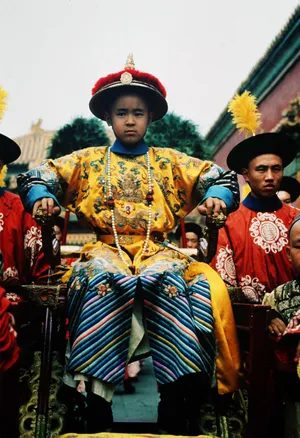
But the real game changer was 1987’s The Last Emperor.
This is not just a biography. This is a cinematic event. Bertolucci tells about the tragic and strange life of Puyi, the last ruler of China. The project was controversial at the time, and special permission was required to film in the Forbidden City. But the victory was incredible. The film swept the Oscars, winning nine awards, including Best Picture and Best Director for Bertolucci. The film remains one of the most visually stunning films of its time and cemented his reputation as a master of scale.
If the last emperor looks back, his next move is forward, heading for the psychological desert. In 1990, it was adapted from the novel “The Sheltering Sky” by Paul Bowles. It’s a radical premise, a trip to the Sahara desert that tests the limits of the characters’ sanity.
The director returned to Europe in his later years, focusing on youth, sexuality and cultural turmoil. Stealing Beauty (1996) places an American teenager in the lively and complex social world of Italy. This is a film about discovery filtered through Bertolucci’s iconic visual lens.
This was followed by The Dreamers (2003). Set during the 1968 student protests in Paris, this erotic thriller depicts the relationship between an American student and a French brother and sister. The work was controversial for its explicit content and romanticized depiction of political turmoil, but it fit Bertolucci’s always-interested conflict between personal desire and historical forces.
He continued to work and continued to make high profile films till the end. The common thread between Novecento and The The Dreamers goes beyond visual style. It’s a fascination with power, whether it’s held by emperors or stolen in bedroom secrets.
The question remains, does this sight detract from the story? Or is the story itself a spectacle?
Bertolucci did not answer this question properly. He just kept the camera rolling.