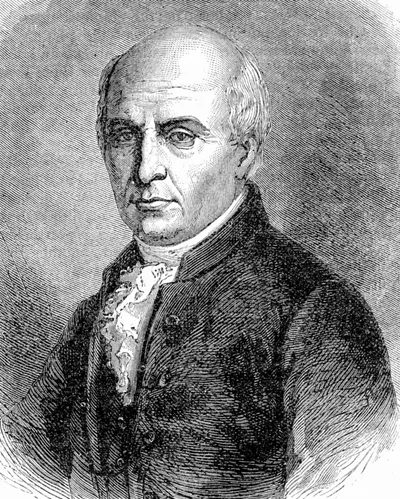
Michel Adanson doesn’t just study plants. He tried to classify them based on the general condition of the body. It was an ambitious, though ultimately unpopular, approach that put him up against some of the most powerful botanical authority of his time. Born in Aix-en-Provence in 1727, Adanson dedicated his life to creating a natural system for naming plants. He was very focused on families and all his physical features. This was in stark contrast to the rising dominance of the Linnaean system.
The Senegalese expedition and its legacy
Adanson’s scientific journey began far from Paris. In 1749 he traveled to Senegal. He joined the trading company Compagnie des Indes. He stayed four years. This is not a vacation. This is fieldwork in its purest form.
He returned to France with a large collection of herbarium specimens. Naturalist Georges Buffon oversaw the addition of some of these specimens to the French Royal Collection. Most of them ended up in the National Museum of Natural History in Paris. They remain there today. In 1757, Adanson published the Natural History of Senegal. This work describes the flora of Senegal and includes an account of the molluscs. It was the first step in defining his own unique scientific vision.
Natural systems and Linnaeus
Adanson’s most famous work is Familles des plantes (1763). Here he explains his classification system. Designed to look natural. It depends on the general physical structure of the plant. This was in direct opposition to Carolus Linnaeus. Swedish botanist proposed a system based almost entirely on reproductive organs.
Linnaeus won the PR battle. Adanson’s system was not widely successful. It was eventually replaced by the Linnaean system. European scientists knew who Adanson was. They just didn’t use his methods. But his influence remains in the details.
Beyond Taxonomy
Adanson didn’t stop at plants. He did extensive research on molluscs. He was the first to use anatomical features to describe this group. He also introduced statistical methods for classifying plants. This was unusual at the time. He studied the electricity in torpedo fish. He studied the regeneration in frogs and snails. He looked at the limbs. He looked at heads.
His work was thorough. It was also stubbornly independent. He refused to fit plants in a box defined only by their reproductive organs. He wanted to wanted the whole picture. Linnaeus’ system was simpler. It was easier to teach. It became the standard. Adanson’s natural system faded into the background of the history of science.
Why Adanson matters today
We often remember who wins scientific debates. Linnaeus’ name is in every textbook. Adanson is a footnote. However, his approach anticipated modern cladistics. He looked at the whole organism. He used data. He tried to find natural relationships, not artificial ones.
Carolus Linnaeus opposed Adanson’s proposed natural classification system. It was not accepted then. It may be more relevant now. Back to genetics and whole genomes. Not just the reproductive parts. Adanson was ahead of his time. He didn’t have the platform.
His specimens are still