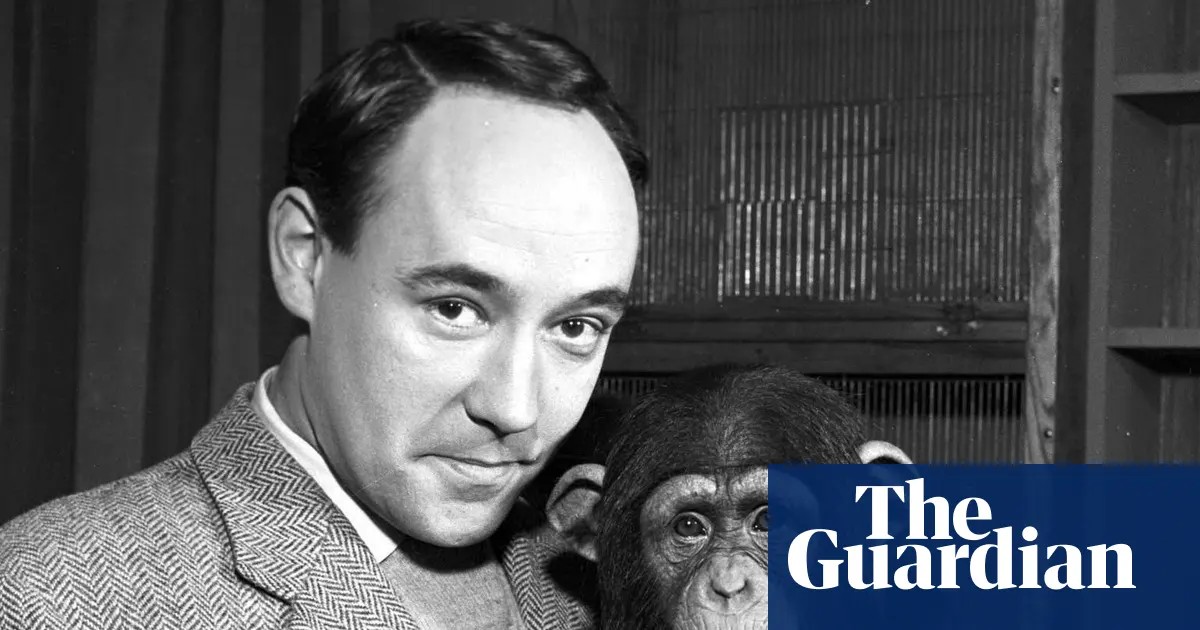
Desmond Morris, the celebrated zoologist, author, and broadcaster who redefined how we view the connection between biology and human culture, has died at the age of 98. Over a prolific six-decade career, Morris transitioned seamlessly from the specialized world of mammalian science to the global stage of popular media, leaving behind a legacy of more than 50 books and hundreds of hours of television.
From the Zoo to the Global Stage
Morris’s journey began in the corridors of the London Zoo, where he served as the curator of mammals. His early career was marked by a rare ability to bridge the gap between rigorous science and public entertainment. In 1956, he helped launch Zoo Time, a groundbreaking weekly program broadcast from a studio built within the London Zoo grounds.
His television career was characterized by a fearless, hands-on approach. He famously once handled a Russian bear cub that savaged his arm on live air—an incident that only served to mesmerize the two million viewers watching at home. This early success laid the groundwork for his later role as a premier science communicator, a path he shared with lifelong friend and contemporary, Sir David Attenborough.
The Man Who Unmasked the “Naked Ape”
The defining moment of Morris’s career arrived in 1967 with the publication of The Naked Ape . The book was a phenomenon, selling an estimated 18 million copies and fundamentally altering the public’s understanding of human nature.
Morris argued that humans are essentially “social carnivores,” driven by ancient evolutionary instincts that often clash with the complexities of modern civilization. By treating human behavior—including intimacy, courtship, and social structures—through the lens of a zoologist, he stripped away much of the era’s social pretension.
“It is the biological nature of the beast that has moulded the social structure of civilisation, rather than the other way round.”
The book’s frankness regarding human sexuality led to it being placed on the Catholic Church’s index of forbidden books. For Morris, however, this was a badge of honor, placing him in the company of literary giants like Voltaire and Zola. While some of his specific scientific theories have since been debated or updated, his ability to capture the “febrile mood” of the 1960s created a new blueprint for popular science writing.
A Renaissance Man of Art and Science
What set Morris apart from many of his peers was his refusal to be confined to a single discipline. He was a true polymath:
- An Artist: Long before his scientific fame, Morris was an accomplished painter. He exhibited alongside surrealist masters like Joan Miró and viewed art through a biological lens, often creating “invented organisms” that followed the rules of natural evolution.
- An Anthropologist of the Everyday: He applied his zoological observations to nearly every facet of human life, from the tribalism of soccer fans in The Soccer Tribe to the intricate gestures of different cultures.
- A Global Explorer: Alongside his wife and collaborator, Ramona, Morris traveled to 76 countries, driven by an “insatiable urge” to observe the full spectrum of human and animal activity.
His social circle was as diverse as his interests, spanning from the scientific brilliance of Konrad Lorenz to the cinematic heights of Stanley Kubrick and Marlon Brando.
A Lasting Legacy
Desmond Morris spent his life navigating the tension between the “academic” and the “performer.” He was a man who could discuss the complexities of the ten-spined stickleback one moment and the aesthetics of Los Angeles graffiti the next. Whether he was teaching a chimpanzee to paint or documenting the evolution of the human primate, his work was unified by a single, driving force: an unrelenting curiosity about the living world.
He is survived by his son, Jason.
Conclusion: Desmond Morris transformed the study of human behavior by reminding the world that we are, at our core, a biological species. His work bridged the gap between the laboratory and the living room, making the complexities of evolution accessible to millions.