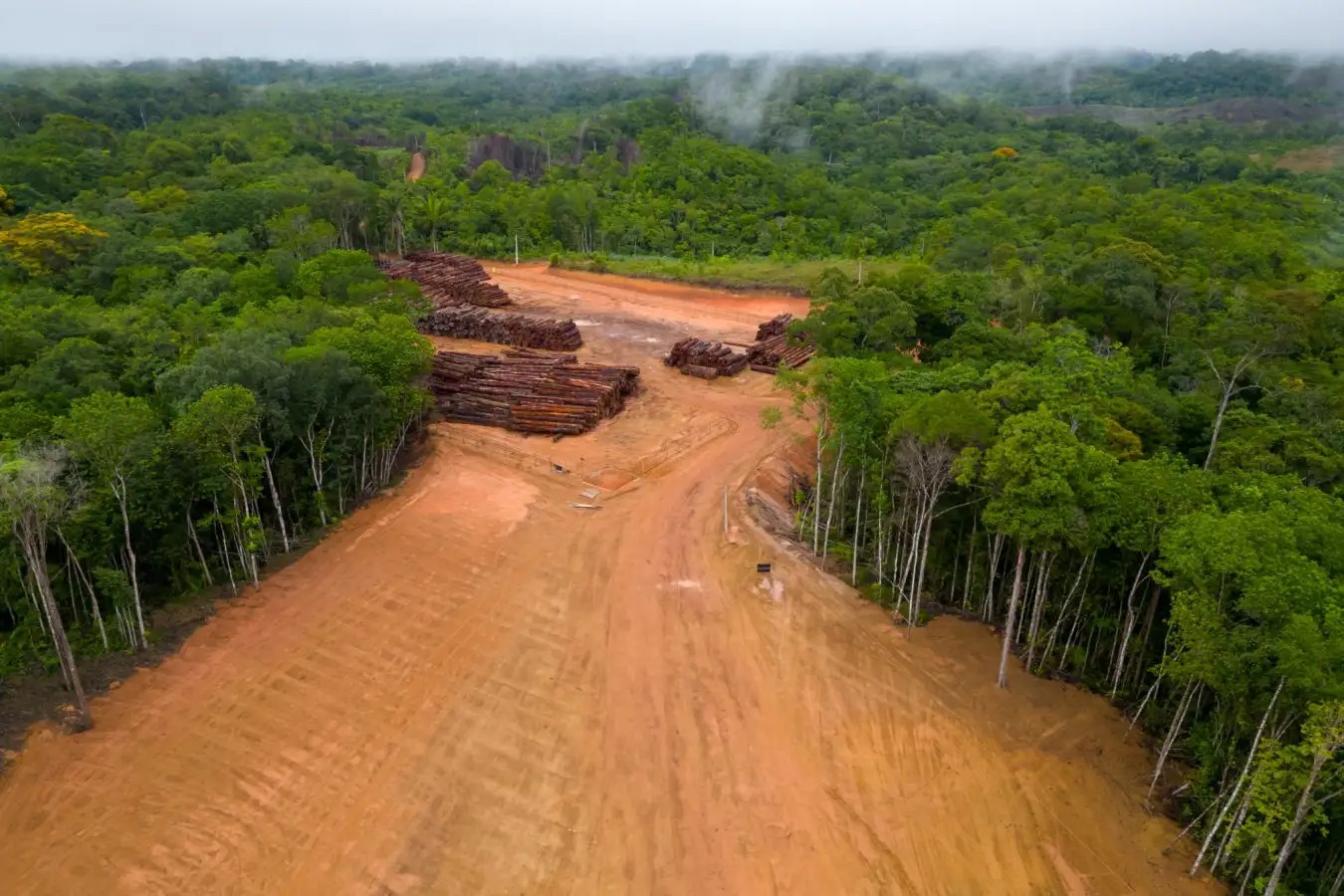
Voluntary carbon markets were designed to offer a financial lifeline to the world’s most vulnerable ecosystems. The premise is straightforward: companies pay landowners to keep forests standing, thereby offsetting their own industrial emissions. However, a growing body of rigorous research suggests that while these markets are flawed, they remain one of the few viable tools for halting deforestation—if the accounting methods are fixed.
Recent studies reveal a stark contradiction: most early forest conservation projects did successfully reduce deforestation, yet they sold credits for nearly 11 times more forest area than they actually saved. This discrepancy highlights a critical gap between intention and execution in the global effort to combat climate change.
The High Stakes of Tropical Conservation
Tropical forests are not just scenic landscapes; they are essential climate regulators. Historically, they have absorbed approximately half of humanity’s fossil fuel emissions, effectively holding back global warming by about 1°C. Despite their importance, these forests face relentless pressure from agricultural expansion, particularly for cattle ranching and palm oil plantations.
The financial challenge is immense. Although tropical forest loss slowed slightly in 2025, over 40,000 square kilometers of trees were still cut or burned. To meet the global goal of halting deforestation by 2030, an additional $216 billion per year in financing is required.
Current funding mechanisms fall short. For instance, Brazil’s Tropical Forests Forever Facility, launched ahead of the COP30 summit, aims to pay countries for every hectare of forest preserved. However, despite a $125 billion target, only $6.6 billion has been donated. This shortfall has pushed corporations toward voluntary carbon markets, but the integrity of these markets has been severely questioned.
“Forests are seriously under threat, and they do need financial mechanisms that can pay for them. Carbon finance is one of the best of a bad set of options for protecting forests.”
— Tom Swinfield, University of Cambridge
The Credibility Crisis
The voluntary carbon market has struggled with trust issues. A 2023 investigation by major news outlets found that 90% of rainforest credits issued by the largest certifier were largely worthless. Consequently, the market value of voluntary credits collapsed by 60% that year and has yet to fully recover.
Critics argue that many projects paid landowners to protect forests that were never at risk of being cut down—a concept known as “additionality” failure. If the forest would have remained standing regardless of payment, the carbon credit is essentially a fake offset.
What the Data Actually Shows
In response to these concerns, Tom Swinfield and his colleagues analyzed 44 forest conservation projects initiated after the United Nations developed REDD+ (Reducing Emissions from Deforestation and Forest Degradation) guidelines in the 2010s. The findings were nuanced:
- Effectiveness: 36 out of 44 projects resulted in less deforestation than would have occurred without the project. Only one project resulted in significantly more deforestation.
- Over-crediting: Despite the physical success of conservation, only about 1/11th of the credits issued were justified by the actual carbon avoided.
The majority of this over-crediting stemmed from methodological errors in how “baseline” deforestation rates were calculated. To determine how much forest would have been lost without intervention, developers compared project areas to unprotected “reference areas.” However, developers often selected reference areas that were inherently more vulnerable to deforestation—such as those closer to roads or on gentler terrain—and modeled worst-case scenarios rather than likely outcomes.
For example, a project in the Peruvian Amazon selected a reference area that was lower in elevation, less steep, and closer to roads than the protected project site. Statistically, the reference area was always going to suffer more deforestation, artificially inflating the value of the credits generated by the protected site.
The Path Forward: Quality Over Quantity
The solution is not to abandon carbon finance, but to correct its methodology. If developers and certifiers adopt more accurate baselines, the number of legitimate credits will drop, and the price will rise.
- Current Low-Quality Credits: Can be purchased for just a few dollars per tonne of avoided CO2.
- High-Quality Avoided Deforestation Credits: Cost tens of dollars.
- Carbon Removal Credits: (e.g., direct air capture or tree planting) Cost hundreds of dollars.
Julia Jones of Bangor University notes that the era of cheap offsets is ending. “You can’t deliver equitable and effective forest conservation for a low price,” she says. Companies aiming for net-zero emissions must be prepared to pay higher prices for credits that genuinely reflect environmental impact.
Rethinking the Role of Offsets
Even with improved methodology, experts like Danny Cullenward of the University of Pennsylvania argue that avoided deforestation credits are fundamentally incompatible with the Paris Agreement’s net-zero goals. This is because they allow companies to offset emissions rather than reduce them at the source.
Cullenward suggests a shift in strategy:
1. Buy High-Quality Credits: Ensure they represent genuine impact.
2. Do Not Retire Them for Offsetting: Use the funds to support conservation directly without claiming them as personal emission offsets.
3. Direct Donation: Simply fund forest conservation without using the carbon credit mechanism.
“We need to protect tropical forests, and if we know how to measure impact, we can pay for and quantify those benefits without making an offsetting claim. We can do so with or without carbon credits.”
— Danny Cullenward, University of Pennsylvania
Conclusion
The carbon credit market is far from perfect, but it is not useless. Research confirms that many projects do save forests, but the financial accounting has been deeply flawed. Moving forward, the focus must shift from volume to verification. By fixing baseline methodologies and accepting higher costs for genuine impact, carbon finance can become a reliable tool for protecting the planet’s critical tropical forests.