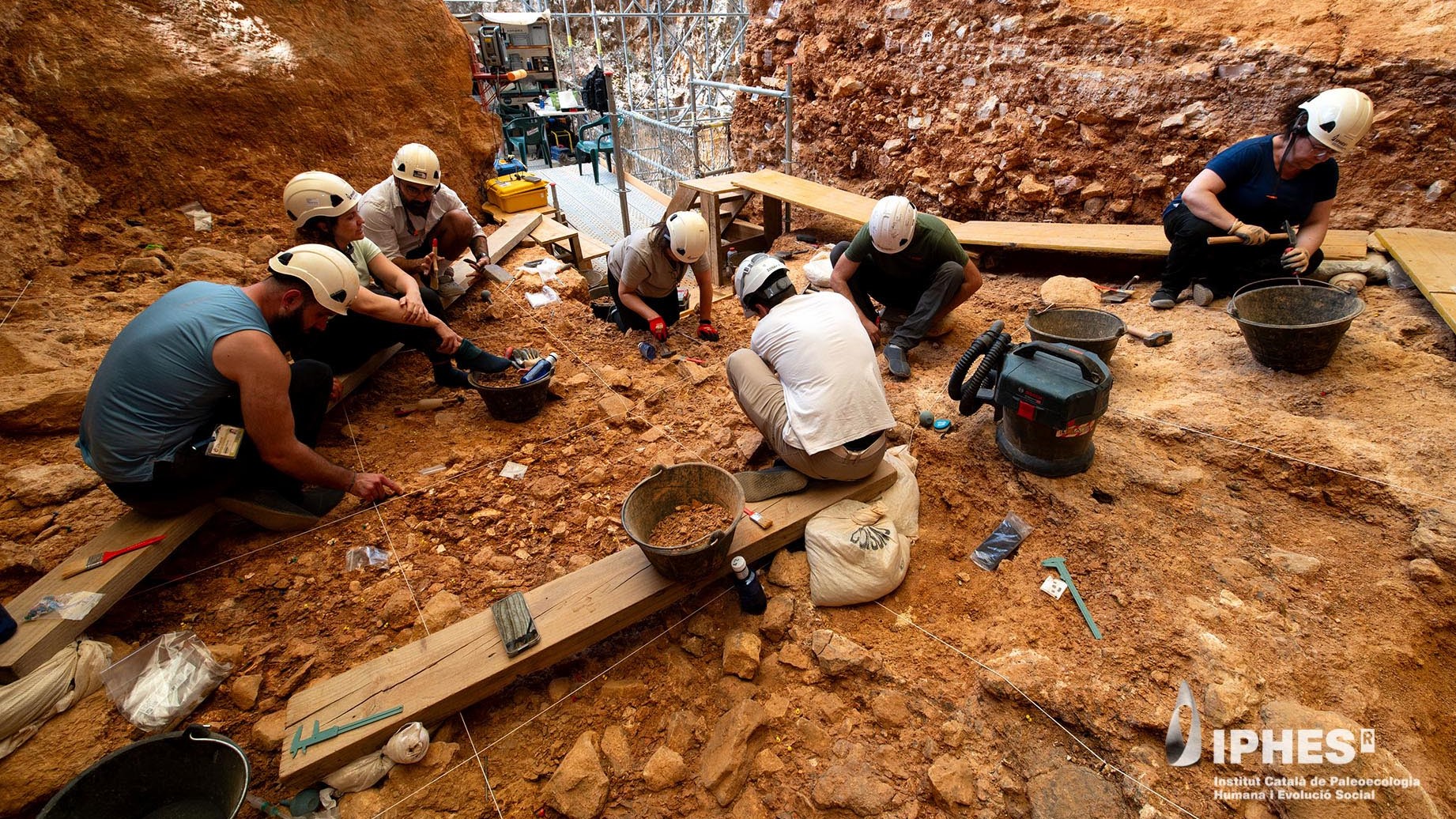
The dirt at Gran Dolina is stubborn. It holds secrets buried under layers of silt and time in northern Spain. New findings shake up what we thought we knew about Homo antecessor.
For years, the narrative was simple. These ancient relatives practiced cannibalism. But they were picky. They targeted the vulnerable. Infants. Children. The easy prey of a rival clan.
That story just got complicated.
Researchers analyzing fossils from the Sierra de Atapuerca complex have found evidence of adult consumption. This changes the timeline and the terror. It isn’t just about scavenging the weak. It’s about eating the strong.
Adults on the Menu at Gran Dolina
The site sits in a limestone cave system. It’s part of a larger archaeological zone that has yielded shocking details about human behavior 850,0000 years ago.
A new batch of fossils has changed the calculus. Two dozen bones. Teeth. Skull fragments. Spine segments. Arm and leg bones. They came from several members of Homo antecessor.
Previous digs suggested a grim trend. Cannibalism was mostly restricted to juveniles. Young, defenseless, and easier to kill. Why risk injury fighting a grown adult? That was the prevailing logic.
Not anymore.
The latest excavation shows cut marks on adult bones. Stone tool scars are clear. They match the butchery patterns seen on animals. The evidence is stark.
“The discovery of more adult individuals… demonstrates that cannibalism was not restrictedto younger individuals,” Palmira Saladié told the media. Saladié is a biological anthropologist at IPHES. She coordinated the new study.
The data now points to at least 13 individuals. Roughly half are adults.
Andre Ollé, also with IPHES, noted the shift. More individuals. More adults. This offers a much fuller picture of the population. It wasn’t just opportunistic feeding. It was systemic.
How to Prove Cannibalism Happened
How do you prove a species ate its own kind? The forensic trail at Gran Dolina is specific.
It’s not enough to find bones next to each other. Nature mixes bones. Scavengers scatter remains. You need hard evidence of processing.
Researchers looked at stone tools. Flint. Quartzite. Sandstone. These tools were found in the same layer as the human remains. The marks on the tools match the cut marks on the bones.
But there’s a darker detail. Human bite marks.
“Some of the human bones also had humanbite marks,” Saladié noted.
Bite marks are the smoking gun. Tools can be used on wood or meat interchangeably. Teeth are more specialized. Human teeth on human bone suggests consumption. Not just cleaning for marrow. Consumption.
The animal bones tell a parallel story. Hyenas. Beavers. Deer. Horses. Rhinos. Their bones show similar butchering techniques. The same hands that broke open a deer femur broke open a human one.
Why Did They Eat Each Other?
The “what” is settled. The “why” remains murky.
We know they did it. For nutritional reasons? Ritualistic reasons? Survival? Or all of the above?
Homo antecessor lived in Europe between 1.2 million and 760,000 years ago. They were our relatives. Not quite us, but close enough to share ancestors.
In 2010, a study highlighted the juvenile focus. It made sense from a risk-management perspective. Kill the young. Get the meat. Avoid the teeth of a fighting adult.
Now, the adult bones are there. Why go for the hard target?
Marina Mosquera, another archaeologist at IPHES, sees potential in the new data. “We have only just begun excavatingthis new area,” she said. “The first results already demonstrate its enormous scientific potential.”
The potential lies in the answers to difficult questions.
- Were adults eaten for specific nutritional benefits?
- Did the size of the adult provide more calories?
- Was cannibalism used as a tool of inter-group violence?
- Was it a funerary practice, similar to endocannibalism seen in some modern societies?
Researchers are now analyzing the bones for age-related differences. They want to map the frequency of these episodes. Length. Frequency. Context.
This will shed light on the social organization of Homo antecessor. Were they cohesive groups? Or were they constantly at war with neighboring bands?
A Darker Chapter in Human Evolution
We tend to sanitize the past. We imagine our ancestors as simple gatherers. Or noble hunters.
Gran Dolina rejects the romance.
These people were smart. They made tools. They hunted large game. They lived in a challenging environment.
And they ate their own kind.
It’s not unique in the fossil record, but it’s rare at this depth. This far back. It forces a reevaluation of early human behavior. Violence. Desperation. And maybe, just maybe, a cultural component we haven’t fully unpacked.
The work is ongoing. More dirt awaits. More secrets are waiting in the dark of that Spanish cave.
Does this change how we view the roots of human nature? It should. It reminds us that the line between “us” and “them” — and between “civilized” and “savagely” — has always been thinner than we like to admit.
The bones don’t lie. They just wait to be heard.