The ground speaks. Usually, it stays quiet. But at Coves del Fem, a rock shelter in Catalonia’s Ulldemolins municipality, the dirt tells a story about 8,000 years ago.
People returned here, again and again, to watch the world change beneath their feet.
In the mountains of Serra de Montsant, a major shift was happening. Hunter-gatherers were putting away their spears. They were picking up plows. The transition was messy, slow, and poorly documented. Until now.
The 2026 Dig in the Priorat Region
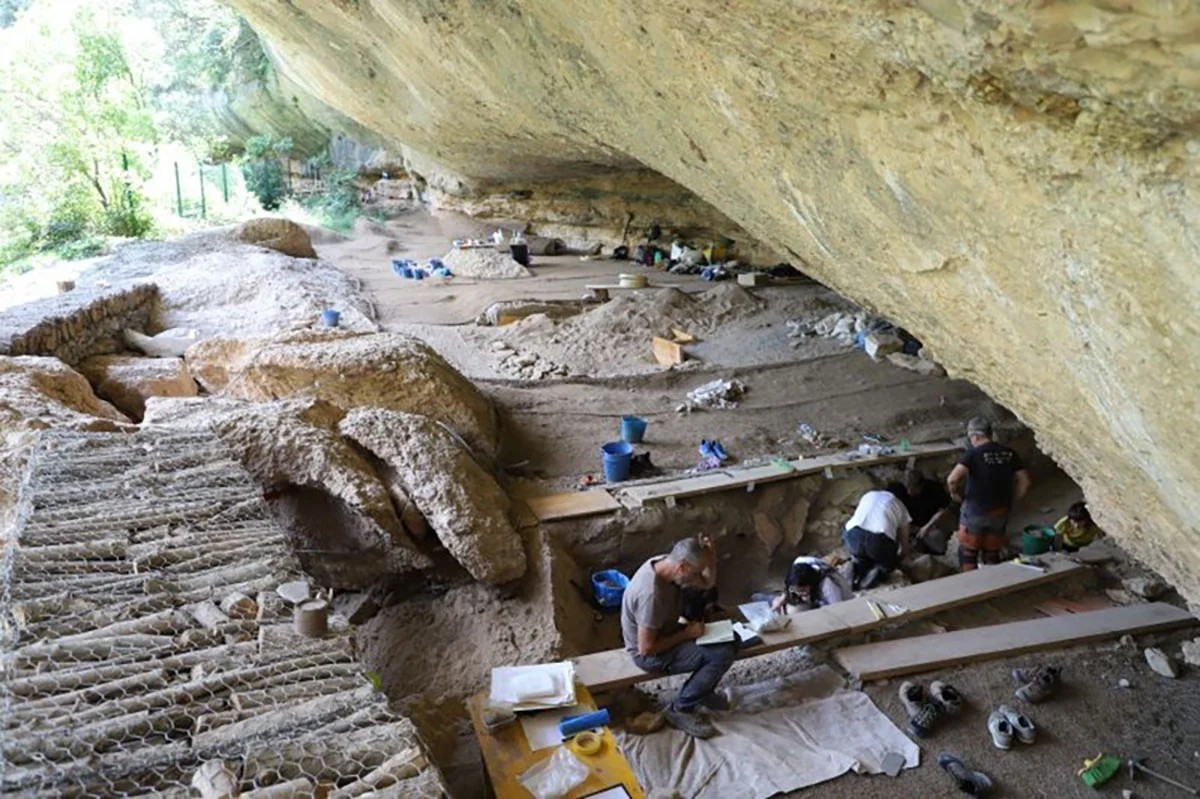
From late May to late June 2026, a team of 25 people — lecturers, researchers, and eager students — broke ground. This wasn’t just a casual scoop-and-bag operation. It was part of a larger, four-year strategy funded by the Catalan Ministry for Culture. The Universitat Autònoma de Barcelona and the CSIC-IMC led the charge, with help from the local town council.
Why this specific spot? Coves del Fem sits above the Montsant River. It’s a natural trap. A place to pause. And over millennia, it became a archive.
The students didn’t just learn theory. They got their hands dirty. They completed practical field training for their degrees, sifting through the exact layers where history happened.
Storage Pits Turned Time Capsules
Here is where the evidence gets concrete.
Excavators uncovered pits. Not just any holes in the ground. Eight of them. They started as silos. Storage spots for grain or surplus food. This implies a level of planning. You don’t build a silo if you plan to eat your harvest within a week.
But these pits had second lives. When the storage need faded, residents dumped their trash into them.
Suddenly, these pits became time capsules.
Inside, researchers found:
– Decorated pottery fragments.
– Flint tools.
– Stone production debris.
– Animal bone remains from eaten meals.
– Carbonized seeds and fruits.
This mix of items paints a picture of the Early Neolithic Cardial culture. It shows an economy in transition. It shows people deciding what to eat and how to organize their daily lives.
The accumulation of household waste in abandoned pits offers a closer view of early Neolithic organization than any open-air site could.
Digging into these pits also disturbed older layers. Layers without pottery. Likely from the Mesolithic period. The hunter-gatherer era. The pits acted like a scalpel, slicing through time and exposing the past underneath.
A Rare Glimpse of the Hunter-Gatherer Past
The most striking discovery of the 2026 campaign? Two exceptionally preserved Mesolithic layers.
Earlier digs had missed them. Maybe the erosion covered them up. Maybe previous archaeologists looked for pottery, not charred seeds. Regardless, this season revealed three hearths and a treasure trove of materials.
Flint artifacts. Animal bones. Archaeobotanical remains — preserved plant evidence that can reconstruct the ancient environment.
This is huge. The Neolithization process — the shift from foraging to farming — is poorly understood in the northeastern Iberian Peninsula inland. We have coastal sites. We have other valleys. But this mountain landscape? This was the frontier.
These layers allow us to ask: How exactly did hunter-gatherers give way to the first farmers in a rugged terrain?
We know that it happened. We aren’t entirely sure how it played out on a day-to-day basis. Did farmers displace hunters? Did they intermarry? Did they adopt the land? The Coves del Fem data is starting to answer those questions.
Why Coves del Fem Matters
The shelter covers about 300 square meters. It’s large. It’s accessible. And it has been excavated continuously since 2013.
Most sites are fragmented. You get a layer here, a layer there. Coves del Fem offers a near-continuous sequence. It starts in the Late Mesolithic, around 6000 BC. It runs right through to the Early Neolithic, around 4500 BC.
That’s a 1,500-year snapshot of social upheaval.
The record is so complete that researchers can even trace scattered activity back to the Upper Paleolithic. And forward, into the end of the Neolithic and the dawn of the Metal Age.
This continuity is rare in Catalonia. It makes the site an invaluable lens. You can see the cultural shifts. The technological changes. The way people started moving resources differently.
Looking Ahead
The 2026 fieldwork was just one chapter in a larger story. It belonged to the project “Coves del Fem: Land Use and Exploitation in the Lower Montsant Basin (80,000–2,000 BC).”
This project runs from 2026 to 2029. The goal is broader than just digging holes. It’s about understanding how these prehistoric communities used the landscape. How they exploited natural resources. How they changed their environment over millennia.
The work wouldn’t happen without the Borrull family. They own the land. They own Coves del Fem. Their support keeps the past visible.
The data is coming in. The analysis has only just begun. What happens when we process all those carbonized seeds and flint tools? We might finally understand the human cost of the first farm.
Or at least, what it felt like to stay put when your ancestors spent their whole lives moving.
The mountain keeps watching. And now, it’s starting to speak back.