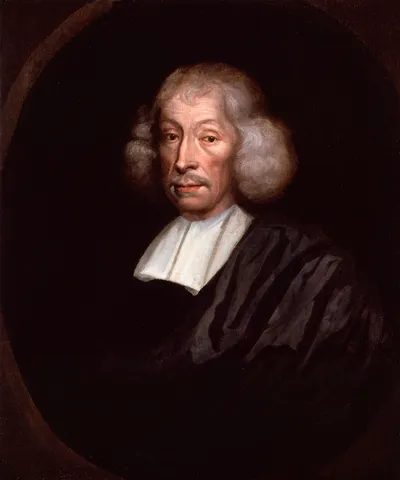
John Ray stands as a foundational figure in the history of biology. Born in Black Notley, Essex, in 1627, this 17th-century English naturalist did more than just catalog plants. He fundamentally changed how we classify life on Earth. His most enduring contribution was establishing the species as the ultimate unit of taxonomy.
Before Ray, classification was often messy. He brought order to chaos. This shift mattered because it gave scientists a consistent language for describing the natural world. That language persists today.
From Blacksmith’s Son to Cambridge Scholar
Ray’s origins were humble. His father was a village blacksmith. Young John attended grammar school in nearby Braintree. Luck, or perhaps careful planning, opened the door to higher education.
A trust fund for needy scholars helped him enter St. Catherine’s Hall at the University of Cambridge in 1644. He moved to Trinity College two years later. This timing was perfect. He arrived just as a circle of like-minded friends formed there. They pursued anatomical and chemical studies together.
Ray excelled academically. He earned his bachelor’s degree in 1648. A fellowship at Trinity followed in 1649. For 13 years, he lived quietly in the collegiate cloister. He was settled. Then came the Restoration.
The Turning Point: Willughby and Europe
Politics upended Ray’s stable life. Although he was not a partisan activist, he held Puritan beliefs. He refused to take the oath prescribed by the Act of Uniformity. In 1662, he lost his fellowship.
Prosperous friends stepped in. They supported him for the next 43 years. This allowed Ray to focus entirely on natural history.
His career had already begun. In 1660, he published a catalog of plants around Cambridge. He soon exhausted that area. He needed new ground.
An expedition in 1662 changed everything. He traveled to Wales and Cornwall with Francis Willughby. Willughby was another naturalist. They made a pact. It was ambitious. They would study the complete natural history of living things. Ray would handle plants. Willughby would take animals.
The pact between Ray and Willughby transformed natural history from a hobby into a systematic science.
They toured the European continent from 1663 to 1666. This trip greatly expanded Ray’s first-hand knowledge. He saw flora and fauna across borders. Back in England, they worked.
In 1670, Ray published Catalogus Plantarum Angliae. Then, in 1672, tragedy struck. Willughby died suddenly.
Ray did not abandon the project. He completed Willughby’s portion. In 1676, he published Ornithologia. He put Willughby’s name on it. It was a gesture of respect, even though Ray contributed at least as much. He also finished de Historia Piscium in 1685. The Royal Society, of which Ray was a fellow, financed that publication.
Building a System of Classification
Ray never stopped researching botany. In 1682, he published Methodus Plantarum Nova. It was revised in 1703 as the Methodus Plantarum Emendata. This work insisted on a critical distinction.
He separated plants into monocotyledons and dicotyledons. This meant distinguishing plants whose seeds germinate with one leaf from those with two. This might seem like a small detail. It was not. It was the backbone of his system.
His masterwork followed. The Historia Plantarum appeared in three huge volumes between 1686 and 1704.
After the first two volumes, people urged him to create a complete system of nature. He responded with brief synopses. He compiled data on British and European plants. He also wrote a Synopsis Methodica Avium et Piscium. It was published posthumously in 1713. He also produced a Synopsis Methodica Animalium Quadrupedum et Serpentini Generis in 1693.
Much of his final decade was spent investigating insects. He published Historia Insectorum after his death.
Why Ray’s Taxonomy Matters
Ray’s approach was different. He did not rely on a single feature for classification. He used all structural characteristics. This included internal anatomy.
He looked at lungs. He looked at cardiac structure. By doing so, he effectively established the class of mammals. He also divided insects based on metamorphosis. Was there one, or was there none?
His system was not perfect. A truly natural system of taxonomy could not be realized until the age of Darwin. Still, Ray got closer than his contemporaries. His methods were not frankly artificial like those of others at the time.
He was a great predecessor. He paved the way for Carolus Linnaeus in the following century. Without Ray’s groundwork, Linnaeus’ contributions might have looked very different.
Faith and Function
Ray’s work was not purely scientific. In the 1690s, he published three volumes on religion. His most popular book was The Wisdom of God Manifested in the Works of the Creation (1691).
It was an essay in natural religion. It called on his full range of biological learning. The argument was from design. He argued that the correlation of form and function in organic nature demonstrated an omniscient creator.
This view implied a static nature. It was distinct from the evolutionary ideas that would emerge in the 19th century. It reflected the common scientific mindset of the 17th century.
Ray died at age 77 in Black Notley on January 17, 1705. He was still working on his insect studies. The legacy he left was not just a list of plants. It was a way of seeing the world. A way that prioritized detail, structure, and the species as the fundamental building block of life.