Plastic is everywhere. We use it, throw it away, and pretend it disappears. It doesn’t.
A single bottle can linger in the waste stream for centuries. Shopping bags tangle in landfills. Car parts rust alongside polypropylene. The problem isn’t just the volume—it’s the sorting. Current recycling systems demand we separate plastics by type. PET here. Polyethylene there. It’s expensive. It’s labor-intensive. And it barely works. Only 9% of plastic gets recycled. The rest? Landfill (79%) or incineration (12%), dumping carbon dioxide directly into the air.
What if you didn’t have to sort?
How alkaline thermal treatment converts unsorted plastics to hydrogen
Researchers from UCLA’s Samueli School of Engineering and South Korea’s Ewha Womans University have a different idea. They don’t want to sort. They want to burn it—gently.
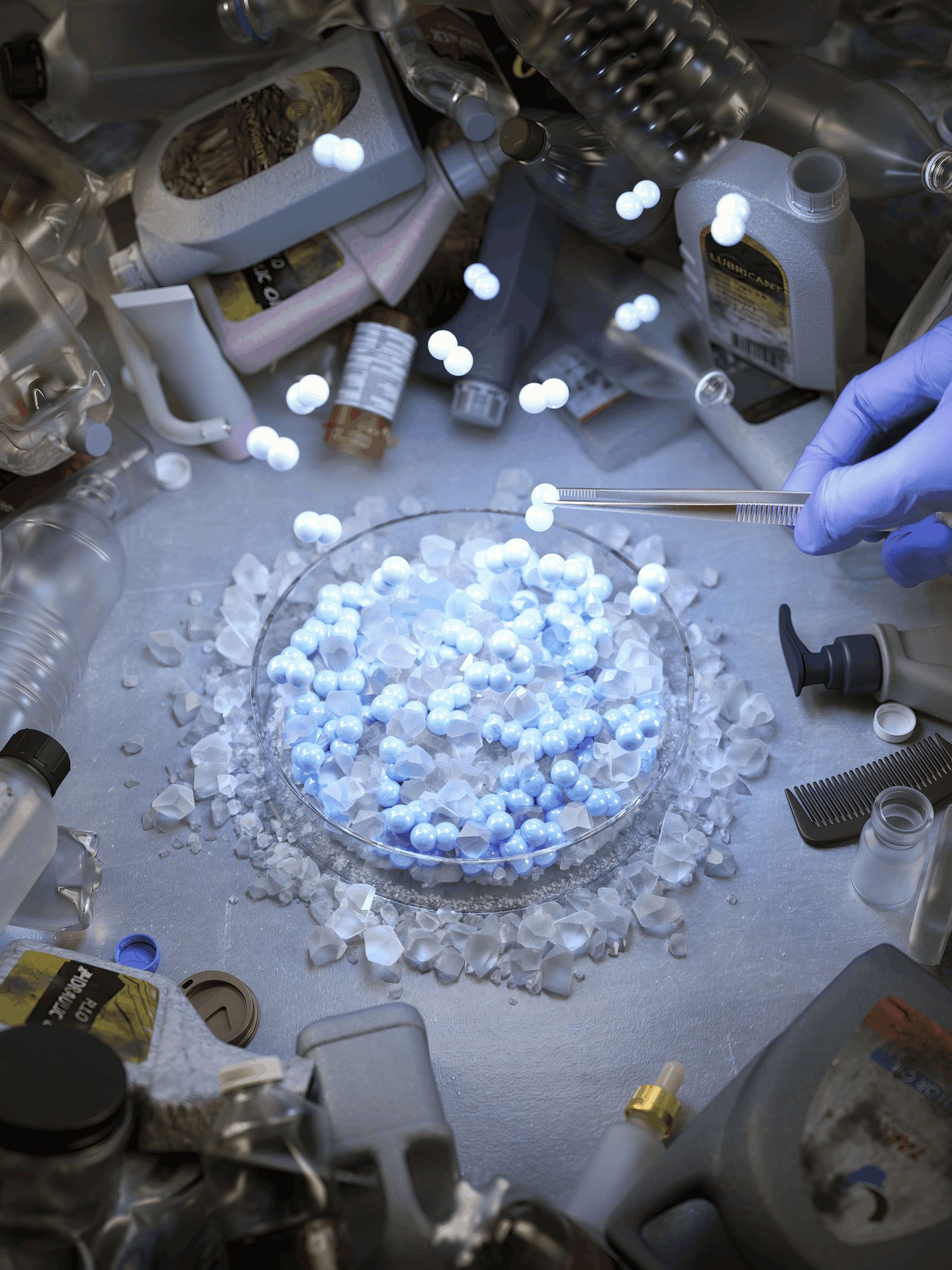
The process, called alkaline thermal treatment (ATT), turns mixed plastic waste into high-purity hydrogen fuel. No sorting required. No massive carbon emissions. It operates at temperatures 300 to 400 degrees Celsius lower than conventional steam gasification.
The team processed a mix of three common plastics:
– Polyethylene terephthalate (PET)
– Polyethylene (PE)
– Polypropylene (PP)
All in one reactor. The resulting hydrogen exceeded 90 purity.
“We are solving two urgent global problems at the time.”
Ah-Hyung “Alissa Park, co-corresponding author and dean at UCLA Samueli, put it bluntly. Plastic waste is piling up. The world needs clean hydrogen for decarbonization. This method tackles both.
Why traditional recycling fails mixed plastic streams
Most low-temperature hydrogen methods have blind spots. Solar-driven photoreforming? Works on PET. Electrochemical conversion? Also mostly PET. Both ignore polyethylene and polypropylene, which make up a huge chunk of discarded plastic.
High-temperature gasification can handle mixed plastics. But it’s messy. It releases substantial CO2. It’s hot. It’s old.
ATT is different. Park and Woo-Jae Kim from Ewha Womans originally developed it for biomass like seaweed. They adapted it for plastic.
PET breaks down easily in ATT. It generates tons of hydrogen. PE and PP? Not so much. Their structures are stubborn—just stable carbon-hydrogen bonds. Sodium hydroxide, the key reactant, can’t grab onto them.
So the team added a pretreatment. Thermal oxidation.
They briefly heat the plastics in air. This introduces oxygen-containing functional groups. It creates chemical handles for the sodium hydroxide to attack. Suddenly, the stubborn plastics become reactive.
Where does the carbon go?
This is the part that matters most for climate goals.
When plastics break down, carbon is released. In gasification, that carbon becomes CO2. It goes into the atmosphere.
In ATT, the sodium hydroxide catches it. The carbon converts into solid sodium carbonate. More than 75% of the plastic’s original carbon stays behind. It ends up in stable carbonate or liquid residues. Less than 13 enters the gas phase.
The release of direct carbon emissions? Negligible.
A simple recovery step can turn that sodium carbonate into calcium carbonate. It’s a mineral used in industries that typically pollute heavily. You’re locking the carbon away permanently. Not just recycling it. Storing it.
Is this commercially viable yet?
The paper is clear. The results are in Proceedings of the National Academy of Sciences. The science works in the lab.
But commercial scale is another beast.
Woo-Jae Kim sees it as a potential next-generation core technology. It supports the hydrogen economy. It supports the circular economy. It cuts sorting costs. It simplifies the process.
However, the team needs to improve performance. They need to prove it’s economically practical. Can it run profitably? Can it handle millions of tons of waste?
We don’t know yet.
The funding came from the National Research Foundation of Korea. The date on the reference is July 2026. Future tech for present problems.
Will it replace landfills? Maybe. Will it replace gas plants? Possibly.
Until then, we keep throwing things away.