It finally worked.
The thirteenth test flight of the Starship program wasn’t just a success. It was a spectacle. Launched from Starbase in South Texas on Friday, July 24, the 408-foot vessel tore into the sky, carrying with it the hopes of a fully reusable heavy-lift system. This wasn’t the first time we’ve seen the megarocket ascend. But this was the first time the entire choreography clicked into place.
A Soft Landing That Defied Expectations
Here is the part that matters most: the ship didn’t break.
For years, engineers worried about the thermal and mechanical stress of re-entry. They feared the heat shield would fail or the structure would tear itself apart. On Flight 13, Starship Version 3 splashed down softly off the coast of Western Australian. It hit the water without exploding. No fiery breakup. Just a controlled entry into the Indian Ocean.
It survived the descent. The heat held. The guidance systems navigated the vehicle from sky to sea with precision. We got drone footage showing the ship gliding in, a fire briefly flaring at its nose before the water swallowed it whole. The visual was stark. The reality was better.
The Super Heavy booster, however, had a rougher ride home. Engine issues marred its return journey. It didn’t make it back to the launch tower like they do on the videos from Musk’s social media posts. But the upper stage—the part that matters for payload delivery—nailed every objective.
Deploying the Future Internet
While the booster struggled, the Starlink mission proceeded without a hitch. The vehicle deployed 20 next-generation Starlink satellites. That’s the real test. Not just getting to space. Getting there with a payload, dropping it off, and then coming back.
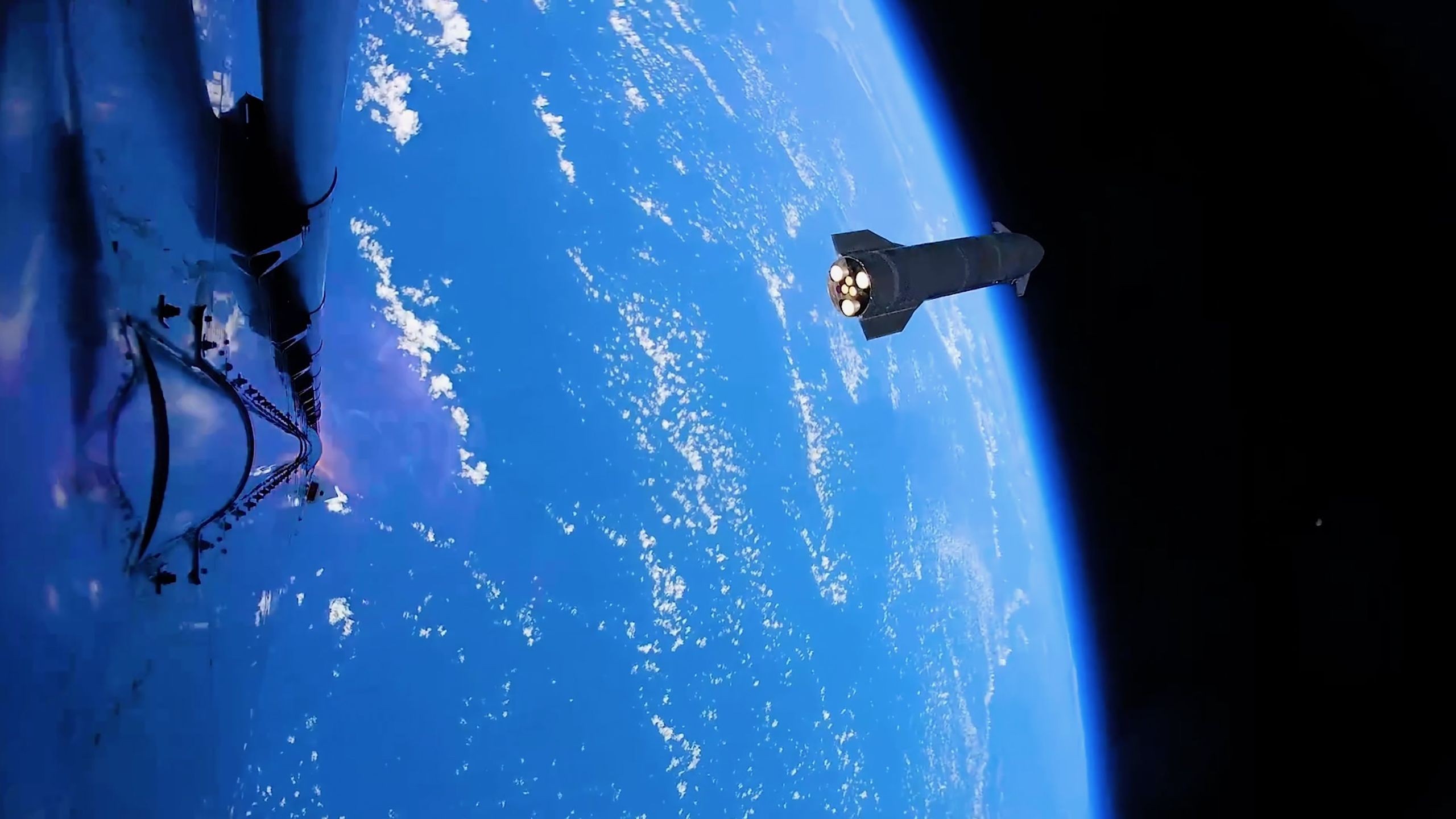
Once in orbit, the ship re-ignited one of its Raptor engines as planned. A burn to prove control. A burn to show it wasn’t just drifting. The six remaining Raptors glowed against the backdrop of Earth in post-separation footage released by SpaceX. You could see the ship cruising away, clean and intact.
This iteration, Version 3, is the first designed for operational use. Since the initial test in April 2023, the rocket has evolved rapidly. Flight 13 proves that the hardware can handle the environment. It’s not theoretical anymore.
The Road to Full Reusability
SpaceX wants to catch these rockets. They want to use the launch tower’s chopstick arms to grab Super Heavy and Ship mid-air, refurbish them, and fly them again. They’ve already caught the booster on three previous flights.
Elon Musk has stated that Flight 14 aims to catch the Starship vehicle for the first time. All depends on the data review. If Flight 13’s metrics hold up, the chopsticks are going to swing.
Why does this speed matter? Because time is the enemy of innovation. Each flight compresses the timeline between problem and solution. The explosion-free splashdown on Flight 13 removes one major variable. It proves the thermal protection works. It proves the aerodynamic controls work.
What comes next is the hard part. Catching the ship. Refurbishing it in hours, not months. Reflighting it.
The imagery shared on X tells a simple story. A blue planet. A glowing engine. A ship landing in water, alive. It’s a long way from a prototype. It’s closer to an operational aircraft carrier of the skies. But the work isn’t done. The chopsticks haven’t closed. The booster hasn’t made a perfect return. We’re close, though. Closer than most analysts predicted a year ago.
The data will tell the final tale. Until then, the image of that soft splashdown in the Indian Ocean stays with us. Proof that the impossible is just a matter of iteration.