


The idea is seductive in its sheer scale. Put the world’s servers in orbit. Cool them with the vacuum of space. Let them float above the storms, above the grid failures, above the terrestrial mess.
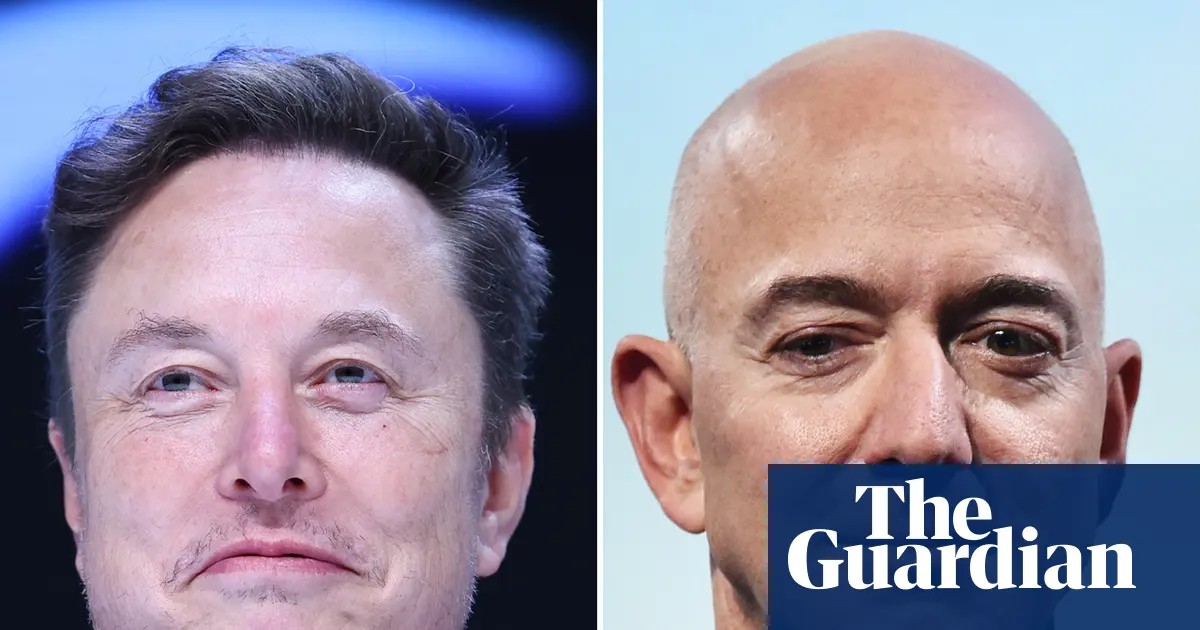
Tech giants like Elon Musk’s SpaceX and Jeff Bezos’s Blue Origin are pushing hard for this future. They call it orbital datacenters. The industry expects millions of them.
But there is a problem. A massive, blackened, metallic problem.
A new petition filed with the Federal Communications Commission (FCC) argues that these plans are not just ambitious. They are potentially catastrophic. The request, backed by environmental groups and space experts, demands a pause on new licenses. The argument? We simply don’t know the consequences, and the risks look grim.
What are space datacenters?
Before the panic, let’s look at the mechanics. Tech companies want to move heavy computing loads out of the atmosphere’s turbulent lower layers. Satellites orbiting Earth offer natural cooling and, theoretically, unlimited solar power.
It sounds like a solution to energy consumption on Earth. And for a few years, it was a fringe concept. Now, it’s a regulatory battle.
Companies have proposed massive networks. Some applications ask for permits to launch tens of thousands of satellites dedicated solely to data storage and processing. The FCC is the gatekeeper. They approve the radio frequencies and the orbits. The petition argues that current approvals ignore the physical reality of what these satellites actually are.
The stratospheric smokestack
Here is the ugly part. Satellites aren’t magic boxes. They are metal and plastic and silicon. And they are made of rare metals, aluminum oxides, and complex alloys.
When these things launch, rockets burn fuel that emits black carbon and nitrogen oxides straight into the stratosphere. That layer of the atmosphere is highly sensitive. It’s delicate. It doesn’t mix with the lower atmosphere quickly. Pollutants hang there.
Then, when the satellites die—after five to fifteen years—they burn up on re-entry. They don’t just disappear. They vaporize. They turn into metallic vapor and soot that settle back down.
Steve Volz, a former head of the NOAA satellite office, put it bluntly. Even if the spacecraft burns up completely, you don’t want to be filling the atmosphere with refuse. It’s no different than adding more smokestacks.
“We do not have a comprehensive understanding of how metals interact with sulfuric acid aerosols,” scientists noted in late 2023. These aerosols act like a planetary sunscreen, reflecting solar radiation and protecting the ozone layer. Introducing unknown metallic compounds could alter this balance. The result? Unknown. Possibly disastrous.
Why this matters now
The sky is already crowded. In 2015, there were about 1,400 active satellites. Today, that number is closer to 15,000. By the end of the decade, experts predict 100,000 in orbit. Not counting the new datacenter networks.
Most of the current pollution comes from Starlink and Amazon’s broadband constellations. They are already injecting pollutants into pristine parts of the stratosphere.
Adding millions more machines into this fragile system is the next step. And the petition points out a glaring oversight. None of the tech giants have provided a meaningful environmental impact statement.
Take Cowboy Space Corporation. Founded by a Robinhood co-founder, they want to launch 20,000 satellites by 2028 to build an “American power grid in space.” Their FCC application mentions only one environmental mitigation: promising to minimize impact on astronomers.
That’s it.
SpaceX claims their orbital centers will “ensure humanity’s multi-planetary future.” Their environmental section mentions “industry-leading brightness mitigations.” No details. No data on cumulative harms. No plan for the metal that rains down.
Light pollution and the dying dark
It’s not just chemical pollution. It’s light.
The petition, filed by Public Employees for Environmental Responsibility (PEER), Earthjustice, and DarkSky International, highlights a different threat. A permanent change to the night sky.
Plants rely on darkness. Animals rely on it. Insects do. The rise in light pollution from dense satellite constellations is contributing to die-offs. Fireflies are struggling. Migratory birds are confused.
“These projects could permanently alter the night sky as we see it,” said Ruskin Hartley of DarkSky International.
The FCC has a legal obligation to ensure the “public interest, convenience, and necessity” are served. The groups argue that the National Environmental Policy Act (NEPA) requires a proper assessment of these impacts. Instead, the agency has been approving licenses based on incomplete information.
The political vacuum
Here is where it gets complicated. Scientific inquiry into these impacts has stalled. After NOAA-sponsored flights in late 2023 detected metals in high-altitude aerosols, further research was halted under the Trump administration.
Without data, you have speculation. But the speculation is leaning heavily toward risk.
Cole Donovan, a former NOAA policy expert, points out that building these datacenters requires massive amounts of rare metals. These resources are already in short supply on Earth. Extracting them creates environmental damage here, just as operating them damages the sky there.
It’s a lose-lose proposition if you look closely at the lifecycle.
Who is asking for a pause?
The petition calls for a halt. A temporary stop on new licenses until the FCC can conduct a proper review. They argue that the current approach violates federal law by ignoring cumulative environmental harms.
Tech companies describe their plans in grandiose terms. “Civilization-changing.” “Epochal.” But when it comes to the actual physical impact—the soot, the metals, the light—silence prevails.
They refuse to embrace any inquiry. They assume the sky is infinite. It isn’t.
Is space the solution?
You can see why they want to do it. The demand for computing power is exponential. AI models are hungry. Data storage is booming. Earth’s grid is stressed. Climate change is intensifying. Space looks like a clean escape hatch.
But is it?
The physics doesn’t lie. You are launching heavy metal into a fragile chemical layer of the atmosphere. You are creating millions of new sources of light pollution. You are consuming scarce resources. And you are doing it without knowing how the chemistry will play out.
The petition suggests that the FCC is ignoring the NEPA requirements. That’s a legal argument. The environmental argument is simpler. We don’t know what we’re doing. And when you don’t know, you pause.
We might be about to turn the night sky into a reflective mirror of our own digital excess. We might be filling the upper atmosphere with aluminum oxides that alter how the planet absorbs heat. Or maybe it’s fine. Maybe the atmosphere can take it.
But no one has proved it can. And the tech giants aren’t waiting for the proof. They are waiting for the permit.


