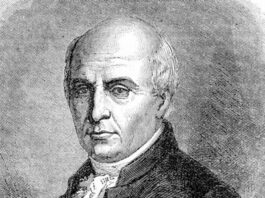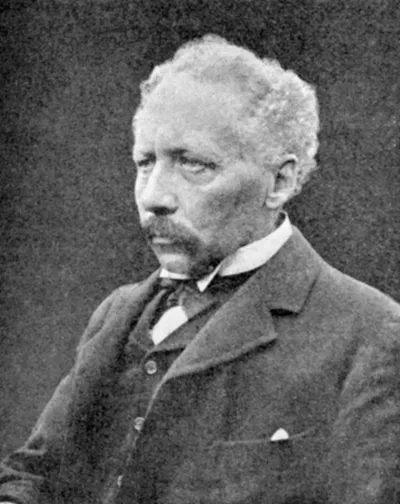
William Bateson didn’t just study biology. He invented a discipline. He coined the term “genetics” in 1905, and his legacy is messy, brilliant, and very human. He was a British biologist who shed light on Gregor Mendel’s obscure pea experiments, although he refused to accept the physical reality of chromosomes.
Born in 1861 in Whitby, Yorkshire, Bateson was originally an ardent evolutionist. He wasn’t looking for genes. He was looking for mechanisms of change. By 1885, using embryological studies as evidence, he argued that chordates had evolved from primitive echinoderms. This was a controversial view, but was eventually widely accepted. However, he had other ideas about how evolution happens. He published Materials for the Study of Variation in 1894, arguing that species do not change by slow, continuous change. Features appear and disappear during jumps. Discontinuous variation.
He realized that if a trait skipped generations, it cannot be explained without understanding heredity. So he turned to breeding. He began experimenting with plants and animals to map the invisible rules of heredity.
Rediscovering Mendel
The turning point came in 1900. Bateson came across a paper called “Experiments with Plant Hybrids”. It had been written 34 years earlier by the Austrian monk Gregor Mendel. Mendel’s pea study was ignored. In the same year it was also discovered by Hugo de Vries, Carl Correns and Erich Tschermak, but Bateson discovered something that others had missed. He noticed that his breeding results were in complete agreement with Mendel’s description.
Mendel succinctly explained how traits are transmitted. Bateson became a champion in England. He translated the paper into English and spent the next ten years proving Mendel right. He wasn’t just repeating experiments. He was expanding them.
Bateson together with Reginald Punnett published the results from 1905-1908. They extended Mendel’s principles to animals, especially poultry. They discovered that certain traits are inherited together. This happened consistently. This seems to violate Mendel’s laws. They called it linkage.
The Chromosome Debate
Linkage made sense later. It turned out genes that are close together on the same chromosome stay together. But Bateson didn’t see it that way. He rejected the explanation put forward by the famous geneticist Thomas Hunt Morgan. Morgan proposed the theory of chromosomal inheritance. Bateson refused.
Why? Bateson proposed the vibratory theory of heredity. He based it on the laws of force and motion. It was a concept rooted in physics, not biology. It found little acceptance. Most scientists sided with Morgan. Bateson’s refusal to accept the physical basis of genes left him somewhat isolated, but it didn’t stop his work.
Building the Institution
In 1908, Bateson became a professor of biology at Cambridge University. He left that chair in 1910. He decided to run the John Innes Horticultural Institution in Merton, South London. The institution later moved to Norwich. He turned it into a genetic research center. It became a hub for the very science he had named.
His books, Mendel’s Principles of Heredity and Problems of Genetics, laid out the framework for future study These show how traits can be predicted, although the mechanisms are still controversial.
Bateson’s story is often described as simple triumph over Darwin’s gradualism. However, the situation is more complicated. He was a dedicated evolutionist who saw jumps in variation. He championed Mendel but rejected the cellular mechanisms that made Mendel’s laws physical. He built a field while arguing against its dominant theory.
Questions remain. Can you build a science while fundamentally misunderstanding its core mechanisms? Bateson did. He provided evidence, names and institutions. The chromosomes took over. Science moves on. Although he was left behind, the house he built still stands.