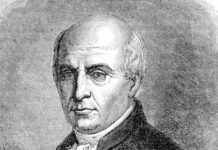
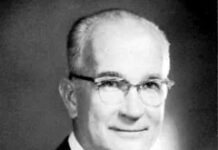
David Hendricks Bergey was more than just a scientist. He is the curator of the invisible world. Born on December 27, 1860 in Skippack, Pennsylvania, he spent his life understanding bacteria. He died in Philadelphia on September 5, 1937, leaving behind a legacy that defines how microorganisms are classified today.
His name appears in the Bergey’s Manual of Determinative Bacteriology. This is more than just a book. This is the microbiologist’s bible. If you want to identify the bug with a microscope, this user guide will tell you who it is. This is a valuable taxonomic reference work that has survived over a century of scientific change.
Bergey began his education in the schools of Montgomery County, Pennsylvania. He was in no hurry to get into academia. He received his B.S. He received his medical degree from the University of Pennsylvania in 1884 and practiced medicine for nearly ten years. He did not go straight into bacteriology. He joined the university faculty in 1893 and in 1894 became a Thomas A. Scott Research Fellow at the Laboratory of Hygiene.
He had a long career at Penn. He became a professor of hygiene and bacteriology. He has taught undergraduate and graduate students. He received a doctor of public health degree in 1916. He didn’t continue teaching forever. In 1929, he became the director of the institute. He worked at the university in various positions until his retirement in 1932. But he didn’t stop working. He became director of biological research at the National Drug Company in Philadelphia. He worked there until his death.
Why the Bergeyr Manual is essential for microbiologists
You might wonder how a manual from the early 20th century is still relevant today. The answer can be found in taxonomy. Bergey has published several books. He created a system.
His research covers many fields. He studied tuberculosis. He researched food preservatives. He studied phagocytosis, the mechanism by which cells absorb particles. He studied anaphylaxis, the body’s reaction to foreign substances. However, his greatest contribution was the systematic organization of the Schizomycetes. That’s the old class of microorganisms that we now call bacteria.
Before Bergey, bacterial nomenclature was confusing. Different laboratories use different names for the same bugs. His manual describes a standardized method for identifying them. It is still in use. In fact, the Bergey’s Manual has evolved. It’s not just a book anymore. This is a digital and print series. But the core idea remains. Organize. Classify. Identify.
How Bergey Shaped Modern Bacteriology
Bergey’s early publications laid the groundwork. Handbook of Practical Hygiene was published in 1899. Principles of Hygiene was published in 1901. These are not just textbooks. These are public health guidelines. These help doctors understand how to protect communities from disease.
His studies at the University of Pennsylvania gave him the resources to dig deeper. He didn’t just read about microbes. He was studying them. The fact that he cares about hygiene meant he cared about