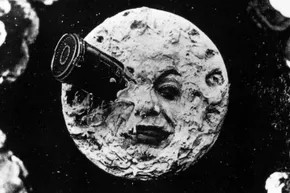
Movies have always been about crossing boundaries. Since the late 19th century, directors have been chasing the next big thrill. Georges Méliès was one of the first people to experiment with photography. He makes short films that defy physics. His 1898 film Un Homme de Tête showed him cutting off his own head and piling it on a table. Two years later, he sent a man to the moon using a bullet-shaped rocket. It’s very wild. This is so dreamy.
But not everyone wants magic. Some people want a movement that feels authentic.
The animation also started quite early. Émile Cohl created Fantasmagorie in 1908. He drew hundreds of simple sketches on paper and photographed them. It was the first fully animated cartoon. Winsor McCay introduced the dinosaur Gertie in 1914. Thousands of frames were used in his work. Its movements were smoother than most cartoons of the time. However, most of the early animations were unstable. coarse.
Then a paradox arises. Filmmakers want both the impossible and the believable. They try to bring cartoons closer to real life. To do this, they invented techniques that are still used today. This is called rotoscoping. It was developed almost a hundred years ago and changed the way we see motion on screens.
What is rotoscoping? Why is it important?
Although the concept of rotoscoping is simple, it is difficult to implement in practice. This is very time consuming. Requires special tools. The basic idea is simple. You shoot live-action material. Photograph moving Actors or objects. Then trace over that footage frame by frame. You can create animations from the trace.
This doesn’t just apply to cartoons. Can be used for special effects in live-action movies. You can separate elements. It is possible to synthesize scenes that do not exist in reality.
Rotoscoping bridges the gap between live action and drawn animation. Capture the physics of real motion and apply it to your drawn characters.
Some in the animation industry see this as cheating. They say that if you don’t draw everything from scratch, it’s not “real” animation. Computer generated imagery (CGI) has replaced many older technologies. But rotoscoping isn’t dead. It’s still a useful tool. This is an advantage for animators and filmmakers who want realistic movement without the guesswork.
The origin of rotoscoping
The story begins with Max Fleischer. He was an animator in the 1910s. He wanted the characters to move naturally. He didn’t want the stiff, jerky movements of earlier cartoons. He needs a solution.
His solution was a Rotoscope. This was a device that could project film clips onto a glass panel. You can draw on the plate while watching the video. This way you can trace the movement precisely in an instant.
The first character to use this technique was Betty Boop. She appeared in the Talkartoons series. Her movements are fluid. It looks like a real person is dancing. This is a big step forward. This gives the cartoons more credibility. It’s also fun.
Rotoscope isn’t just for characters. Also used for background elements. For example, in *Snow White
Max Fleischer is more than just an artist. He’s also a tech geek, and he was long before that word existed. As the art editor of Popular Science Monthly, he was obsessed with the way things worked. The standard animation seemed stiff to him. He wanted fluidity. Realism. So he invented the rotoscope. This is a way to combine cartoon action with the basics of real physics.
He doesn’t work alone. The Fleishers are family. Max assembled his brothers Dave, Joe, Lou and Charlie to create the prototype. Before Hollywood studios knew it, they were tinkering with equipment and glass. Max applied for a patent in 1915. The patent was granted two years later in 1917. The mechanism is simple but innovative.
Clown on the roof
The first tests were not done in the studio. It’s on the roof of an apartment building in New York. The weather doesn’t matter. The light did.
They brought a hand-cranked projector. They turned it into a camera. Dave is wearing a clown costume. His mother had sewn the outfit herself. They shot over a minute of footage. Dave moved. He danced. He posed.
Then came the tracing. The brothers assembled a rotoscope device. It projected the film frame by frame through the glass panel of the art table. Max placed the tracing paper on the other side. He traced the image.
One frame at a time. He drew, then moved the film to the next frame and drew again. The patent also describes a cord-pulling mechanism so that the artist does not have to reach for the lever. efficiency. That’s the goal.
Once the drawing is complete, you need to photograph it. Max uses the same projector and this time sets it up as a camera again. He removed and replaced the lens cap by hand. click. to touch click. next frame. This is physical work. Precise labor.
They developed the film. They played it back. It worked. Animated clown movements come to life. He was Koko. The character that would define an era.
From Koko to Superman
Max started making animations. Dave began directing. Around 1919 they published “Out of the Inkwell”. Koko the Clown defies gravity and jumped out of inkwells However, the rotoscope stabilized his movements.
The studio continues to grow. In the 1930s they had Betty Boop. Next is Popeye. In the 1940s, “Superman” appeared. Those shorts are expensive. It is also visually detailed. Rotoscoping allowed them to create realistic human movements while exaggerating expressions. You can have the weight of a real body and the snap of a comic book panel.
Cab Calloway is at the center of it all. Three Betty Boop cartoons use rotoscoped footage of the jazz singer: Minnie the Moocher, The Old Man of the Mountain and Snow White. The first two opened with live-action footage of Calloway and his orchestra. Minnie the Moocher contains the earliest known footage of Cab Calloway’s performance. You can see the jazz legend’s moves translated for Bimbo and other characters. The connection between live action and animation is seamless. It was uncanny.
The First Feature-Length Experiment
Rotoscope isn’t just for shorts. Used by Fleischer Studios for “Gulliver’s Travels”. Released in 1939, it was the second full-length animated film produced in the United States. The first was Disney’s Snow White, but Fleischer’s work has a different texture. Dynamic cinematography brings a sense of gravity to the characters. A presence. This isn’t just cartoon logic. It is human logic filtered through ink.
The technology has spread. Other animators noticed too. They want that genuine quality. However, the Fleishers patented the process. They control the means of production. There was a time when if you wanted to rotoscoped motion, you had to go to New York. You paid the fee. You have realism.
It changed the way audiences saw comics. They weren’t just drawings anymore. They are performances. Recorded, traced, and reanimated. The line between the real world and the anime world is blurring. Koko was just the beginning. Technology is the star.
Rotoscope doesn’t just copy movements. It captures the soul of the movement.
Its legacy can still be seen today. Modern animators still use this tool. Instead of replacing creativity, it anchors it. When characters look real, even in a fantasy world, it’s usually because rotoscoping is at work.
Disney just didn’t figure out how to make Snow White work. They shot real people first.
Marjorie Celeste Belcher (later Maggie Champion) stars as Snow White. Louis Hightower is a prince. Actors Eddie Collins and Billy House played Dopey and Doc. Don Brody disguises himself and took on the disguised queen. These Actors act in basic scenes. Their movements were recorded.
Animators then follows the keyframes. These work at the beginning and end of actions. The in-between shots? These are hand-drawn on transparent cells. It’s a mixed process. Real life turns into cartoon.
This is not a one-time experiment. Disney took the same approach with Peter Pan. Hans Conried voices Mr. Darling and Captain Hook. Buddy Ebsen plays a pirate. Dancer Roland Dupree plays Peter Pan. Margaret Kerry provided the physical reference for Tinker Bell. Other Disney films followed. The studio creates fantasy worlds based on live-action references.
Realism discussion
Rotoscoping have sparked debate. Some critics call it cheating. Shortcut. They claim that characters modeled on real people look different than traditionally animated animals. This action feels uncanny. Or too stiff.
Disney tried to hide the technique. At the premiere of “Snow White,” Belcher sat on the balcony. Far from the crowd. They told her not to talk about his role. He didn’t even know she had been rotoscoped. It took decades for her to learn the truth. The secret was finally revealed after visiting the Disney exhibit.
But the results speak for themselves. Snow White became a masterpiece. It’s still a classic. The controversy paled in comparison to its success.
Beyond Disney: Heavy Rotoscoping
Other studios didn’t shy away from this technique either. Some leaned into it. Extensive rotoscoping can make your movie look like it’s live footage painted over.
The Beatles’ Yellow Submarine (1968) featured “Lucy in the Sky with Diamonds”. It used obvious rotoscoping.
Ralph Bakshi made a career out of it. He used this technique in Wizards (1977). This was followed by The Lord of the Rings (1978). Next up was “American Pop” (1981). The famous series was completed with “Fire and Ice” (1983) and “Cool World” (1992). Columbia Pictures played down the dynamic cinematography when announcing “American Pop.” They may have been worried that the audience would think it was a trick. Instead, it gives the film a unique, dreamlike quality.
Music videos and digital development
In the 1980s, rotoscoping was introduced to music videos. A-Ha’s “Take On Me” (1985) is a standout. Live-action footage alternates with sketchy comic book animation. The effect is amazing. It matched the energy of the song.
INXS used it in “What You Need” in the same year. Animations and color effects have been added to the video. It’s not just feature films anymore. This is a short-form visual storytelling.
Richard Linklater pushed the technique even further. “Waking Life” (2001) and “A Scanner Darkly” (2006) were both filmed with live actors. Then turned into animations. This process is called an interpolated rotoscoping. Bob Sabiston, a graduate student at MIT, created software that interpolate images between keyframes. Speed up your work. Creates a smooth, drifting result. Animators can focus on expression rather than manual frame-by-frame work.
Why it still matters
Rotoscoping are more than just a footnote in history. Animators still use it to learn movement from scratch. It teaches how bodies to move in real space.
It is also used in live-action films. It’s not limited to cartoon. It is a tool that blending reality and imagination. The line between the two is never been blurrier. Or even more interesting.
The Analog Art of Traveling Mattes
Forget the glossy digital rotoscoping of modern CGI. Creating the original “Star Wars” lightsabers and the horrors of Alfred Hitchcock’s “The Birds” is gritty, manual, and exhausting. In the analog era, it wasn’t just about tracing animation cells. It’s about compositing—smashing together different elements that have never been in the same room before.
The director probably wants the hero to stand on the soundstage with a real ocean behind him and looking terrified. Or maybe they needed an explosion that was too dangerous for the actor. It’s not just about pointing the camera. You painted.
Painting the Void
The workflow is a physical nightmare. You have to take a roll of film, project each frame onto a glass plate and draw it by hand.
frame by frame.
If you want to separate the person from the background, you can trace the outline of the person in a transparent cell. Next, paint the rest of the cells to create a matte surface (mask). This mask is placed on top of the background footage. The blacked out area hides the background and leaves a transparent window for the actor in the foreground.
However, you will need several rolls. We need the original footage, the black mask and the “negative” of that mask.
Here is the trick:
- Expose the background film with a black mask in front. This will burns the background in except for the parts hidden by the mask.
Expose the same frame again, but this time place the negative mask in front of the actor in the foreground. The clear spot in the negative matte lets the actor shine through exactly where the background is covered.
This is a cake layered with light and paint. And you have to do it 24 times a second.
The Traveling Matte
Typical 35mm film runs at 24 frames per second. This works out to 1,440 frames every minute. Let’s do the math. If the scene lasts one minute, 1,440 separate masks must be drawn.
And the subject moves.
Static objects are easy. A person walking? An explosion expanding? That’s a traveling matte. The shape and position change from frame to frame. If the actor’s hand moves 2 inches to the left at frame 50, the mask hole at frame 50 must be redrawn. If the miss by a millimeter, the composite image becomes jittery. Looks fake. The audience sees the wobble and the spell is broken.
Precision or Nothing
It’s not just about the outlines. The lighting must match the background perfectly. If the sun sets on the plate photo, but the Actors are lit by fluorescent lights, the composite image looks like a sticker on a postcard. Color correction later can help, but it won’t fix bad trace.
Everything has to be adjusted physically. Films, masks, projector lenses. All it takes is one slip, a speck of dust on the glass, and everything changes. The result is a wobbly, ghostly mess.
Clean up the mess
Beyond the blockbuster explosions, this technology also serves a humble purpose. It cleaned up mistakes.
Have you ever wondered how to remove shadow from a boom microphone? Or is it the safety cables that holds the holding up a stunt wire? Or is it just a little white staging markers on the floor? Rotoscoping could trace these intrusions, create masks to block them out, and fill the gaps with clean background plate footage. It keeps the illusion intact. You didn’t see the machinery. You can see the magic.
Digital Legacy
We no longer paint with a brush. Computers can create these traveling mattes in seconds using artificial intelligence and edge detection. The manual labor is gone. The physical roll is archived. But the logic remains. We are still isolating the foreground from the background. We are still compositing.
We just do it faster. And it’s cheap.
Of course, the end result is cleaner. But will it be as soulful as the hand-painted matte finish that took a week to complete? Probably not. But then again, this is no ordinary Marvel movie.
Computers shrank. They got faster. They got cheaper. This hardware revolution hasn’t just changed the way we edit; fundamentally rewired special effects.
With CGI, you can stuff almost anything to pass the eye test. But what about rotoscoping? It used to be a physical grind. Now, thanks to digital tools, work goes faster than ever. Spend less time tracing and more time creating.
The Digital Workbench
The philosophy remains, but the medium shifted. A glass table is no longer needed. No more stacking physical animation cels on projected film reels.
Modern workflows work in virtual layers. One layer holds a digitized video clip. The other holds your paint. the other holds effects. There is no need to photograph the results. You export a digital file.
The graphics software mimics the old tricks. You can draw in the frame with a mouse, trackpad or drawing tablet. Do you want traditional rotoscope animation? Keep the underlying film visible. Want to peel it off? Only the animation is left. Or build complex masks to incorporate photographed or computer-generated objects into your scene.
Mattes are usually drawn in separate frames. Use the selection tool. Use the paint tool. This is where splines come in handy. These are curves with draggable points. If you adjust the spline in one frame, it’s easier to adjust it in the next frame than to redraw it from scratch.
Automation and monitoring
This software does more than just draw pictures. It handles the movements for you.
Track position from frame to frame. Tell the program where the object is in the first frame and where it is in the 10th frame. Let the software interpolate between them. It figures out what needs to be there.
Modern programs are increasingly able to recognize shapes. They outline and mask across multiple frames. You don’t need to trace every edge. This saves a lot of time.
Color adjustments can be made immediately. Morph one object into another. Feather edges at the touch of a button. Copy part of the screen. This cloning tool will help you cleaning up sets. Remove cables? Copy the sky or wall and paint it over the wire. Make it look like it never existed.
The Software Landscape
Rotoscope tools didn’t appear overnight. Early software for this type of work began to appear in the 1990s. Colorburst. Commotion. Matador.
Today’s list is even longer. Stronger.
- Adobe Flash
- Adobe Photoshop
- Adobe After Effects
- Imagineer Systems’ Mocha
Silhouette - Autodesk’s Flame and Smoke
*Blackmagic’s Fusion - Foundry’s Nuke, Ocula, and Mari
Some of these require enterprise-grade hardware.
expensive computer.
Expensive licenses. Others, like Adobe’s suite, are accessible.
Even hobbyists with a decent laptop can get into the game. Independent filmmakers are no longer left behind.
Color Keying Versus Rotoscoping
You might be wondering how digital rotoscoping compares to another major player in visual effects: Color Keying.
The color key depends on certain shades. You isolate a color (usually green or blue). It is very fast. It’s efficient for large backgrounds. However, it fails if the objects have the same color.
Color doesn’t matter in rotoscoping. It cares about edges.
In the digital age, the lines between these approaches are blurring. The software can now key color * and * rotoscope edges in the same workflow. Key operations are performed in the background. Rotate to see foreground. These tools can solve both problems.
Which method do you choose?
Depends on the shot. Depends on the complexity. It depends on how much time you have.
But one thing is clear. Physical barriers disappear. The glass table was covered in dust. A new era has arrived. Works with code.
Forget painstaking frame-by-frame tracing of rotoscoping. For decades, visual effects artists have relied on color keying, also known as Chroma keying, to combine digital elements into live-action footage. This technology is behind every blue screen or green screen shot you’ve ever seen, and it was a game changer when it was first used in The Thief of Bagdad in 1940.
However, Disney has its own secret weapon. They didn’t use blue or green. They filmed the Actors against a pure white background and lit them only with sodium lamps. This unique method avoids shadows and creates clean mats for classics like Mary Poppins Returns, The Parent Trap and The Absentminded Professor.
The Rise of Green Over Blue
Why did green take over? It has to do with digital sensors. When post-production moved from film to pixels, green became the default color. Digital cameras can capture details more easily in green than in blue, and lighting a green wall is cheaper and easier than lighting a blue wall.
The process is simple. You film actors against a single-color backdrop. The software then creates a moving mask by removing that color (or rather, removing all colors that aren’t it). Automatically pick foreground and background elements. No more manually tracing each edge frame by frame.
“It eliminates the need to manually outline and mask elements frame by frame, making the process much easier.”
But it’s not magic. The rules are strict. Actors cannot wear costumes that match the background. If the main character is wearing a green jacket on a green screen, his body will disappear into thin air. Also, because real-world objects are rarely monochromatic, “bleeding” often occurs, where faint traces of the background color bleed into the object. To solve this, a strong color correction is needed.
When Keying Fails
The color key is effective, but not foolproof. Sometimes an actor’s hands step out of their comfort zone. Sometimes the prop slides into the blue state. When this happens, rotoscoping steps in as the cleanup crew.
If someone moves out of the area where the key is being manipulated, artists go back in with rotoscoping tools. They manually create a traveling matte for the parts that could not be separated using the software. This is a hybrid approach. Use keys for most content and rotoscope for errors.
Motion Capture Versus Rotoscoping
Motion capture, often called mocap or more recently performance capture, is more than just a new technology. This is a digital evolution from old techniques like rotoscoping and color keying. The goal remains the same. The process of combining new moving elements (usually actors) into a scene. where rotoscoping traced over film, motion capture still requires building a 3D frame from scratch. It’s like the difference between drawing a face on a blackboard and sculpting the skeletal structure underneath.
This technology originated in the mid-1990s. Originally it was for scientific purposes. Researchers want to study movement. That’s when Hollywood noticed. The initial setup was tricky. Actors wear costumes with reflective markings. They perform alone in the studio. Cameras surround them. The data is stored in the software. The 3D model appears. Animators added faces, clothes and souls in post-production.
Ideal for initial trials. Batman’s shadow in Batman Forever (1995). The crowds in Titanic (1996). Jar Jar Binks in Star Wars Episode 1 (1999). Then came Gollum. Performed by Andy Serkis. This changes everything. This proves that digital characters can have emotional weight.
But the industry doesn’t stop there. Every blockbuster demands better.
The face of performance
The biggest advancement is face capture. Early versions used markers on the face. It looks very stiff. Looks fake. Then came “King Kong” (2005) and “Pirates of the Caribbean: Soul Chest” (2006). Davy Jones was a pioneer. However, Avatar (2009) changed the game significantly.
Director James Cameron wanted more than action. He wanted micro-expressions. He used helmets with cameras pointing at the faces of the actors. Their skin is painted with dots. The camera recorded every twitch. Every blink. Every movement of the lips. It’s not just physical data. This is performance data.
The actors were still wearing the infrared LED suits. They are still in the filming stages of “The Volume” for Weta Digital. But finally they could see each other. they can react. The software takes the raw data and maps it into Na’vi characters. Animators no longer have to guess what a subtle grimace should look like. That’s it. Captured. Genuine.
Compare this with the early days. In The Lord of the Rings, most of Gollum’s face was animated manually using body information as a guide. In Avatar, the face is the performance. The difference is important. This is the difference between a puppet and a human.
On-Location Realism
The tech moved out of the studio. Pirates of the Caribbean: Dead Man’s Chest allows Bill Nighy to appear with the cast. he is wearing that suit. He wore the markers. But he was on set. He was interacting with Orlando Bloom and Keira Knightley. Industrial Light & Magic later added CGI tentacles. The interaction was real.
By 2011, Rise of the Planet of the Apes had progressed even further. Caesar, again played by Andy Serkis, was filmed outdoors. Location shooting. Natural light. Infrared LED lights and Helmet cameras take care of the rest. * Dawn of the Planet of the Apes (2014) improved this. The environment is real. All performers are real. The apes were real, but the way they do it is unprecedented.
Seeing the Invisible
Perhaps the most disruptive innovation comes from Avatar. Virtual cameras.
Cameron didn’t have to wait until post-production to see CGI. He could look through a monitor. He saw the Na’vi in the jungle. He saw the lighting. He saw the composition. All in real-time. This allows you to direct the shot as if the character were actually there. He adjusted the camera angle. He changed the lighting. He gives instructions based on what he sees, not what he imagines.
Peter Jackson used the same technique in The Hobbit: An Unexpected Journey (2012). As a result, post-production still took a lot of time. The final polishing took several months. But what about direction? This happened that day. The on-set graphics gets better every year. The gap between vision and execution is closing.
The Uncanny Valley and beyond
Mocap isn’t just for live-action movies. It built a whole world. Final Fantasy: The Spirits Within (2001) was an attempt to make a fully animated film. Looks very real. It felt wrong. The characters get lost in a “beautiful valley.” They looked like people, but there was something different about them. The eyes didn’t quite track. The skin didn’t quite breathe.
Robert Zemeckis tried again in The Polar Express (2004) and Beowulf (2007). More detail. It’s more realistic. Still, viewers hesitated. The technology exists. The soul does not match the skin at all.
But the complaints are waning. The new animation does not arouse such primal anxiety. Rendering is faster. Describe in more detail. The boundaries between human and digital are blurring. It’s not just sports. Please exist.
We have passed the novelty phase. Mark disappeared from sight. The helmet is thinner. Cameras have just gotten smarter. The rest is history. And the actors.
The future is not in better suits. It’s about invisibility. When I forget, the Actors are dressed in their gear. When you forget that the character is not real. That’s it.
we are very close.
Performance capture lets you do things rotoscope can’t. It makes actors living beings. Any living thing. The story dictates the form and the technology enables it. No one spends hours in the makeup chair. No heavy, restrictive costuming. The results look very realistic. It moves realistically.
However, find out about the costs. It’s expensive. And it’s not always the right tool for the job.
Most movies rely on effects that you don’t notice. The microphone is pulled out of the frame. Shooting a snowy scene in spring and adding more snow later. These are invisible fixes. They keep the illusion intact without turning all the characters into CGI models. Not all stories need a digital double.
This is where the debate between rotoscoping and motion capture becomes interesting. Both methods capture the soul of the actor in an animated body. One traces frames by hand. The other records bone movement and skin deformation. But they serve different masters.
Why Rotoscoping Still Matters
With digital tools, you can get results quickly. cheaper. It’s more real than ever. You might think that rotoscoping is outdated. A technique from the hand-drawn era.
This is not true.
It remains a useful weapon in a filmmaker’s arsenal. Sometimes you want a certain look. A dreamy mist. A changing reality. Richard Linklater used it in Waking Life and “A Scanner Darkly.” Style becomes substance.
Rotoscoping isn’t just for style. This is for survival.
It is also a safety net. When a scene goes wrong. When a practical effect fails. When compositing requires a pixel-perfect cutout. The animator took out his tablet. frame by frame. It’s tedious. It’s precise. It works.
When to choose which one?
So which method should you choose?
If you want realistic people and creatures that move with natural weight and gravity, performance capture is the answer. It captures the micro-expressions. subtle changes in posture. Actors do more than just voice actors on the charts. They are in the scene.
If you want artistic abstraction. Or if you need to fix a messy practical shoot. Rotoscoping is still king. It offers control. Pixel-level control.
Live-action film production has also changed. You can now film even dangerous scenes. Too expensive. Or maybe it’s not possible in the real world. Digital composition makes this possible. However, the choice between frame tracking and bone tracking depends on your goals.
Do you want realism? Or do you want emotions?
These tools are better than ever. Your options expand. But the goal remains the same. Make it believable. Make it work.