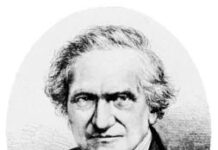
Theophilus Shickel Painter didn’t just look at cells. He saw a blueprint. Born in Salem, Virginia, in 1889, and dying in Fort Stockton, Texas, in 1969, this American zoologist and cytologist cracked a code that stuck. His work proved that the giant chromosomes found in the salivary glands of fruit flies could pinpoint the position of individual genes with a precision no other method had achieved.
Before Painter, figuring out where a gene lived on a chromosome was fuzzy. It was like trying to find a specific street number in a city using only a satellite view of the whole state. Painter changed that.
Why giant chromosomes in fruit flies matter
You might wonder why we care about the inside of a fly’s mouth. The Drosophila melanogaster, the common fruit fly, has chromosomes in its salivary glands that are unusually large. They are polytene chromosomes, meaning they consist of many DNA fibers aligned side by side. This makes them visible under a light microscope.
Painter realized early on that these structures were perfect for studying genes. They didn’t squirm. They didn’t hide. They stayed in place long enough to be studied in detail.
In 1931, he published a drawing. It showed a section of a Drosophila chromosome with more than 150 distinct bands. These bands were not random noise. They were landmarks. For the first time, scientists could determine the precise loci, or physical positions, of genes.
“These bands allowed for the first time the determination of the precise loci, or positions, of genes.”
From Yale to Texas: The path to discovery
Painter’s journey began at Yale University. He earned his Ph.D. in 1913 and joined the faculty that same year. He stayed there until 1916. Then he moved to the University of Texas.
He spent the rest of his career in Texas. In 1946, he became president of the University of Texas. But his biggest scientific contribution happened in the lab, not in the administration office.
His 1931 work was a turning point. By mapping those 150 bands, he turned the fruit fly chromosome into a coordinate system. Biologists could now say, “This gene is at band 45,” rather than “This gene is somewhere in the middle.”
How this changed genetics
Why does this matter to you? Because understanding where genes are located is the foundation of modern genetics. It allows researchers to link specific traits to specific chromosomal regions. If you want to know why a fly is white-eyed, or why a human carries a genetic risk, you need to know the address.
Painter gave that address.
His method wasn’t just a better drawing. It was a new language for biology. It allowed for more accurate mapping of genetic inheritance. It paved the way for the detailed genetic maps we use today.
The legacy of a precise map
Painter died in 1969, but his work lives on in every genetics textbook that explains chromosomal mapping. The idea that you can zoom in on a chromosome and read its bands like a ruler is a direct result of his observations.
He proved