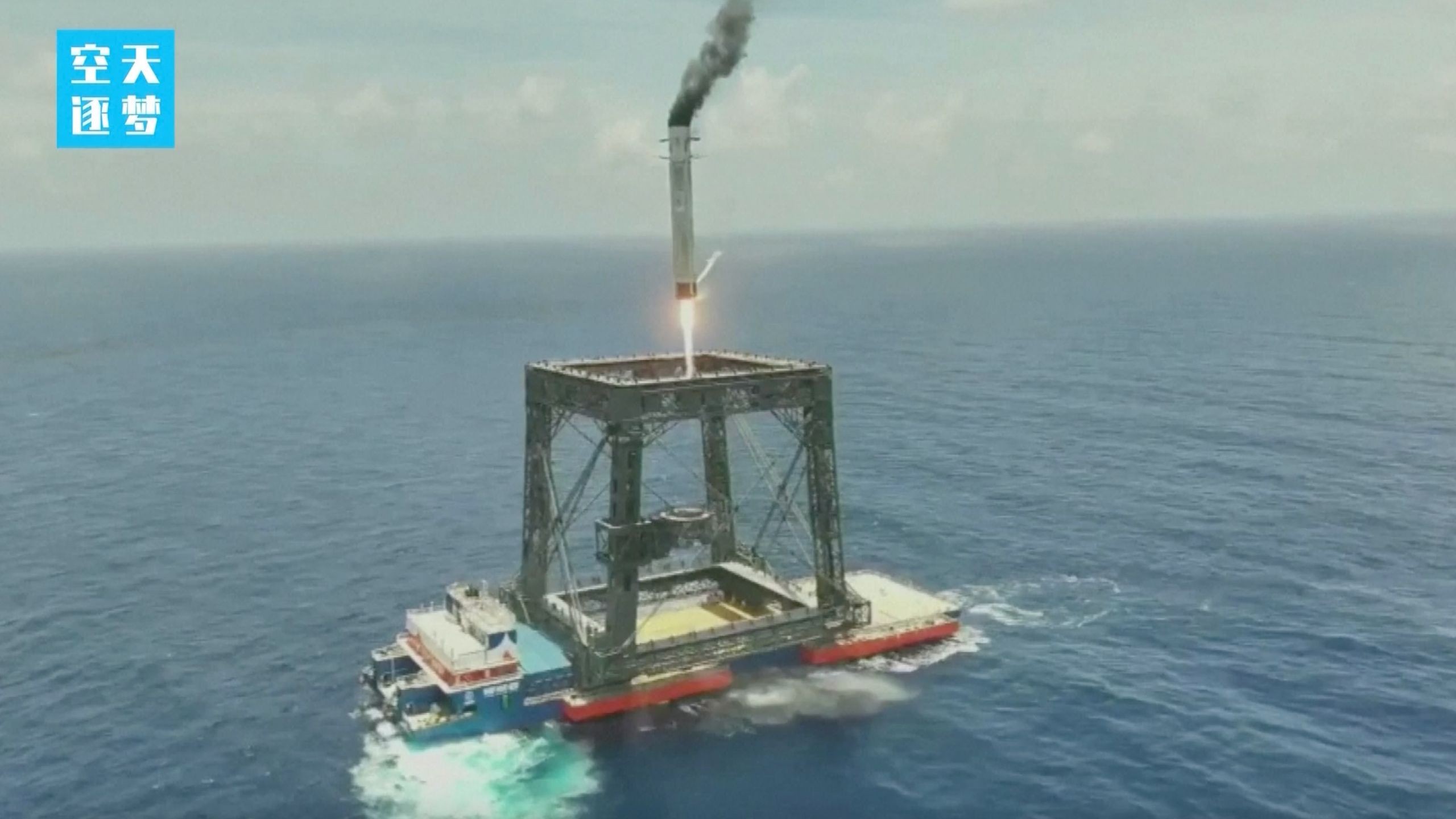
China made history this Friday. Not with a speech, not with a flag waving in slow motion, but by catching a falling rocket stage in a net.
The Long March 10-B launched on July 10. Its first stage dropped away. Instead of splashing down like junk, it flew back up—vertical, controlled, deliberate—and landed softly in a ship-held net at sea.
First time ever.
“This mission marks my country’s first successful… and the world’s first network-based [net-based] recovery,” CASC said.
They didn’t say “we are trying.” They said it was done.
How It Works (Sort Of)
The Long March 10-B is tall. About 63 meters, which feels longer when you’re looking up at it launch from Hainan. The first stage drinks kerosene and LOX, cheap fuel, efficient enough. Second stage goes methalox—liquid methane and LOX, the modern mix, cleaner burns, higher performance.
Payload? Sixteen tons to LEO. In reusable mode.
The satellite? Up. On orbit. “Predetermined orbit,” vague enough to keep the intel tight. The rocket itself? Recovered.
SpaceX Doesn’t Like Competition
Vertical landings, until now, belonged to SpaceX alone. They’ve done it over six hundred times. It’s mundane there—Tuesday news. Here? Monumental.
Cost cuts matter. Reuse cuts costs. CASC admits it: “Significantly reduces launch costs,” they wrote. “Advantages of large payload capacity.” Translation: cheaper, faster, more flights. China wants in. And it just kicked the door open.
Other rockets are waiting in line.
The Long March 12-A tried. Failed. December launch. No landing.
The Zhuque-3? Built by Landspace, another private player out of Beijing. Also launched that month. Also no touchdown.
This? This sticks.
What’s Next
CASC plans to refly the booster by year-end. Same stage. Same mission profile. Different trip.
That’s how reuse starts. One catch. One return flight. Then another.
Space doesn’t wait. Neither does Beijing.