It begins with Lhonoja.
A supernova that burned worlds. Civilizations crumbled like dry bread. And I, narrator and witness, spoke to a god. Or maybe just something pretending to be one.
But stories have to start somewhere. Mine starts with a landing strip.
Glastya Row wasn’t always a borough in the sprawling, profit-chasing city of Heom. It started on Tu-mdo, a planet that lucked out with geography. Comfortable gravity. A magnetic shield thick enough to keep the radiation at bay. Not frozen. Not roasted. Already blessed with a moon to churn its newly thawed oceans into something livable. The first colonists got to breathe air within two generations. No five-century slog in underground arcologies while the atmosphere settled. Just go outside, take a breath, start digging in.
Two thousand years later? Just another address in the United Social Venture’s machine.
They say you can judge a Venture by its babies’ middle names.
In Antekeda—the specific corporate hive that owns my zip code—the trends are predictable. Chairman leads at 15 percent. Entrepreneur takes 10. Director holds steady at 9. Abundant and Dilent chip in with the rest.
Elsewhere it’s different. Theymann favors Pioneers and Engineers. Halsect drifts into sentimentality with kids named “Aspiring.”
My parents wanted dignity. Not wealth. Just dignity. So they named me Mawukana “Respected” na-Vdnaze. They weren’t dreaming of stardom. They just wanted neighbors to acknowledge that we existed, and that we were decent folk.
Things went down from there.
I was a noisy baby. They say I cried an “unhallowed” amount. Nobody knows what unhallowed means, honestly, but it sounds bad. The volume probably spiked when they shoved the Chint chip into my left bicep.
That’s when the bill landed.
Before I even tasted breast milk, I was tagged with my defining feature. Debt.
The birth cost 400 Glint. Then came the “miscellaneous” charges—bedding, shots, checkups—for another 1,872. My parents scraped together savings. Good parents. Responsible. They knocked the balance down to 700 Glint and started paying the 1.5 percent child-rate interest. To make up for the intrusion, Antekeda gave me fifty shares. Citizen status, technically. By age fifteen those shares were worth nearly 6oo Glint. My debts were past 92,oo0.
They call it fairness.
The pitch is always the same. We are pioneers. Our world is scarce, hard, cold. Everything we have—air, roads, school desks—was paid for in blood and sweat. You owe the Venture. You work it off. You rise by your labor.
All are born equal.
Or at least that’s what they tell you. They call the whole system of social and economic sorting Shine.
My family wasn’t High Shine.
My parents ran a dump selling cold-broth dumplings. The customers were middle managers—stressed, well-dressed, too exhausted to cook. My parents tried. They smiled until their faces hurt. They pitched in for catering gigs in fancy districts. Nothing scrubbed the smell of Glastya.Row from their fingers.
Every six months an Antekeda rep would stop by. Offer another course. “Radical Enterprise Growth” or whatever. My mom would sign up. Do the work. Pay the fees. Sit at dinner table talking about how this was it—the move, the breakthrough.
It never happened.
I worked the tables during my “cute” phase, which apparently lasts from age seven to eleven. I was hunting for tips. The one miracle.
By twelve you could see my future.
My father’s hair. My mother’s complexion—like a sunset viewed through smog. Short. Pale lips. Eyes that squinted shut in confusion, which is often, since the world doesn’t make sense.
“Smile with your eyes,” my mother said. One of those moments where she believed we were ascending.
So I went to the mirror. Grubby upstairs bathroom. I squeezed my lids. Waggled eyebrows. Tried to map every twitching muscle on my dishcloth face until I found a look that didn’t scare people.
It worked.
Too well, maybe. Or perhaps the effort made me look like a fraud. Either way, I got moved to the kitchen. Mom took the front. She’s better at bamboozling strangers than I am at hiding.
Fourteen. School gets too pricey. The reality sets in. No Shine life for Mawukana.
My classmates are dropping out. Heading into menial labor—the engine that actually keeps the Venture turning. The ones staying are learning the game. Alliances. Enmities. Petty theft. Who can out-cheat whom? Bullies win if they don’t get caught. Getting caught is worse than the crime. Being cruel? Fine. Just don’t leave a trace.
Economists look at Shine societies and wonder. Why the low education stats?
Other worlds, the ones with solar arrays and atomic reactors and automated farms? They view education as the best use of human time. Primary importance.
Shine views education differently.
Education breeds curiosity.
And curiosity is the first thing leadership wants to cut out of you. Like an appendix.
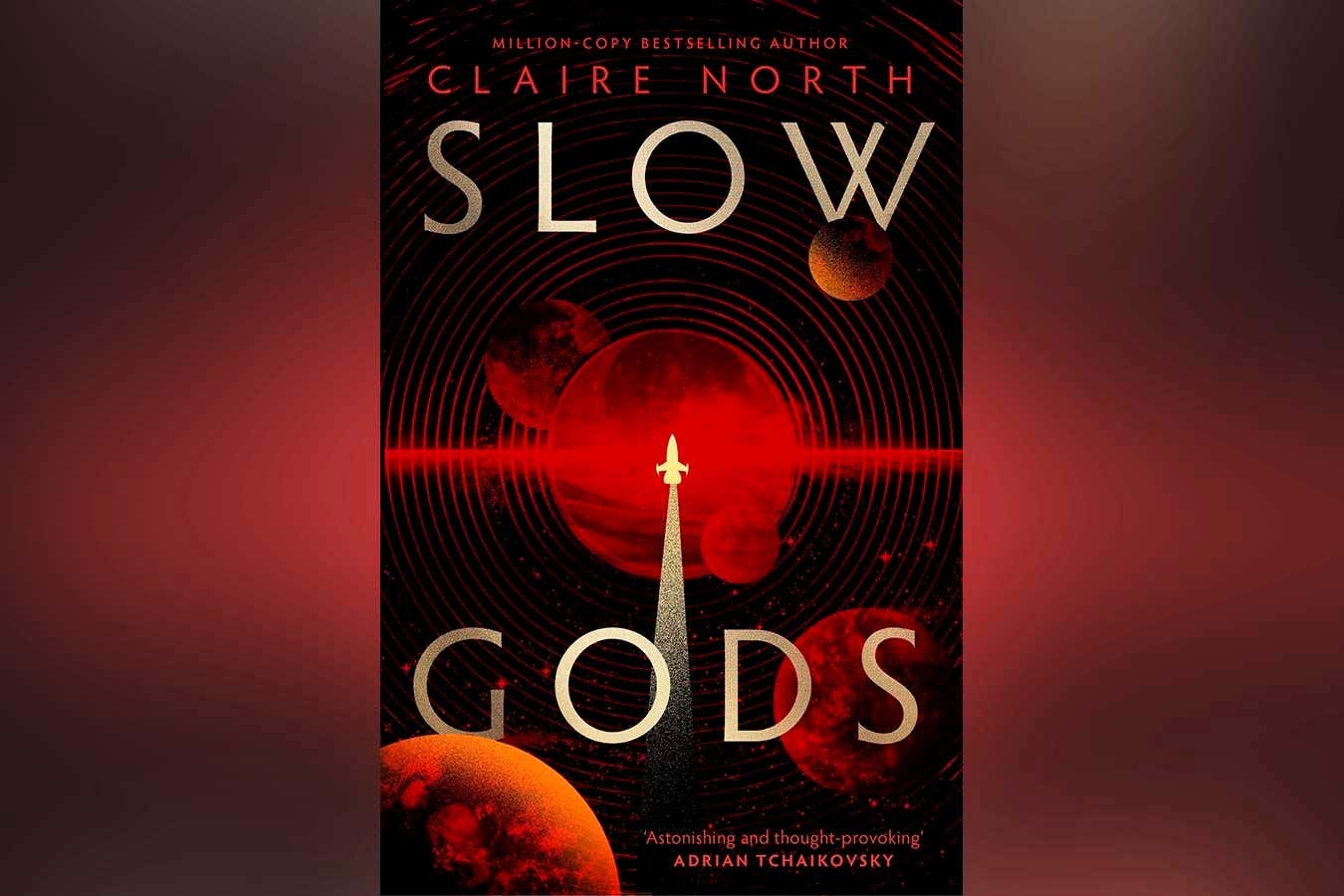
Slow Gods by Claire North is the current pick for New Scientist Book Club.
The links above send cash my way. Not much, but enough.