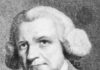
Henry Purcell is still the king of English Baroque music. No one else in the three centuries between William Byrd and the 1900s came close to his range. Born in London around 1659, the kid showed promise early. His first composition? He wrote it at age eight.
That’s not just precocious. That’s terrifying.
His start was weirdly specific. He was in the Chapel Royal choir as a boy. The education came from heavy hitters like Pelham Humfrey and John Blow. But when his voice cracked, Purcell didn’t stop working. He started fixing royal instruments. He tuned the Westminster Abbey organ. It was a hands-on apprenticeship that taught him exactly how music sounded in the real world.
By 1679 he was organist at Westminster. Two years later, in 1682, he took the organist post at the Chapel Royal. The pressure was on. The stakes were high. He needed to produce.
“Dido and Aeneas” achieves a high degree of dramatic intensity within a narrow framework.
Most people know Purcell for one opera. Dido and Aeneas arrived in 1689. It’s short. It’s tight. It punches harder than most full-length operas. He packed intense drama into a small space. It remains his most famous work for good reason.
Then he expanded. He didn’t just stick to standard opera. He created what we now call “semi-operas.” These were hybrids of music and spoken drama. The titles alone tell you the scale of his output. King Arthur (1691). The Fairy Queen (1692). The Indian Queen (1695). These weren’t side projects. They were major cultural events in Restoration London.
But the operas are just the highlight reel. Look at the full resume. He wrote incidental music for plays. He wrote about 250 songs. He composed 12 fantasias for viol consort. He filled the church with anthems and services. The volume is staggering. The variety is even more so.
Why does he matter today? Because he defined a sound. English Baroque isn’t a vague style. It has a specific texture. Purcell built it. He is widely regarded as the greatest English composer after Byrd and before the 20th century. That’s a massive gap to cover. He did it in roughly 36 years.
He died young. November 21, 1695. London. Just 36 years old.
The canon didn’t stop growing. But the foundation was laid. Every English composer who followed him had to answer the same questions he posed. How much drama can you fit in a few bars? How do you make the viol sound like a human voice? How do you make a king sound tragic?
Purcell answered. Then he died. The music stayed.