
We’ve always liked to think we’re the smartest tools in the shed. It’s a good way to sleep at night. The industrial revolution gave us factories. The digital age gave us silicon. We built machines to do the heavy lifting, the math, and the repetitive drudgery. But somewhere along the way, the question shifted. It’s no longer just about efficiency. It’s about superiority. Can a machine actually outthink us?
The raw numbers don’t lie. A modern computer can crunch billions of calculations in the time it takes you to brew a pot of coffee. It can store more data in a drive the size of a fingernail than exists in the Library of Congress. If you’re playing a game of pure probability or memory, you’re already dead to it. You don’t stand a chance against the hardware.
But games aren’t just math. They’re strategy. They’re psychology. For decades, programmers treated board games like equations to be solved. The goal? Find the perfect move. The perfect line. A path so optimal that the human opponent simply ceases to matter. In some games, if you go first and play perfectly, you win. Period. In others, you might not win, but you guarantee a draw. It’s a sterile victory, but it’s a victory nonetheless.
Solving a game depends entirely on its complexity. Some puzzles have been cracked wide open. Others remain stubbornly opaque. We are looking at five specific showdowns between flesh-and-blood humans and cold, hard code. These aren’t just random pairings. They mark the milestones of computer science. They show us how far we’ve come. And they remind us that while the machine may be faster, the human spirit is still trying to find a crack in the armor.
BKG 9.8 vs. Luigi Villa: The Checkmate Begins
The year was 1980. The venue was the World Backgammon Championships in Nassau, Bahamas. The stakes were low in terms of prize money—just $1,000—but high in terms of ego. On one side of the board sat Luigi Villa, a top-tier human player with decades of experience under his belt. He had beaten every computer program of his day. He thought he was invincible.
On the other side sat BKG 9.8, an early backgammon program running on a minicomputer. It wasn’t a smartphone in your pocket. It was a room-sized beast of a machine. But it had something Villa didn’t expect. It had depth.
Villa played with intuition. He relied on gut feelings, pattern recognition, and the subtle art of reading an opponent. BKG 9.8 didn’t read anything. It calculated. It looked at thousands of possible futures for every single move. It didn’t care about feelings. It cared about statistics.
The match was a disaster for Villa. He lost 10-1. Not 10-9. Not 10-8. One. Ten. The margin of error was so wide it wasn’t even close. Villa tried to adjust. He tried to play defensively. He tried to outthink the algorithm. But the algorithm wasn’t thinking. It was computing. And in that moment, the myth of human supremacy in strategy games took its first

The Dice Were Kind, But The Logic Was Sound
It happened in June 1979. Hans J. Berliner, a computer programmer who also happened to be a chess player, watched his backgammon program dismantle Luigi Villa. The score was 7-1.
A total blowout.
For the first time in history, a machine had beaten a human champion at a board game. The stakes were high. The prize was $5,000. The method, however, was different from what you might expect today.
Backgammon isn’t just strategy. It’s chaos wrapped in wood and plastic. You roll dice. Bad rolls can sink you. Good rolls can pull you out of a hole you dug yourself. That’s exactly what happened between Villa and BKG 9.8.
Players who later analyzed the matches said something interesting. Villa was the better player. By skill alone, he should have won. But luck intervened. BKG 9.8 benefited from several lucky dice rolls.
“Villa was the better player but BKG 9.8 benefited from several lucky dice rolls.”
Still, the victory marked a turning point in computer intelligence.
Berliner explained that his program didn’t rely on a database of moves. It didn’t memorize thousands of positions. Instead, it analyzed the position of pieces on the board. It assessed the risks or benefits of moving each piece before making a decision.
Later backgammon programs became even more proficient at playing against human opponents. They learned to calculate probabilities better. They learned to hide bad moves behind good luck.
There’s no record of how BKG 9.8 spent its winnings.
Did it buy more processor cycles? Did it invest in a better cooling system? The code doesn’t say.
4: Chinook vs. Marion Tinsley
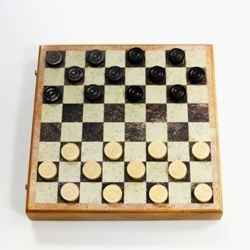
People usually dismiss checkers as a game for kids. They see it as the stripped-down, less glamorous cousin of chess. But if you look closely at the board, you see a labyrinth of traps. You need strategy. You need tactics. You need a brain that never sleeps.
Marion Tinsley had that brain. He wasn’t just a player; he was the world champion from 1955 to 1992. In a span of forty-two years, between 1950 and 1992, Tinsley lost only five games. Five. That’s not a margin of error. That’s a fortress.
Then came August 1992. Tinsley agreed to play a new opponent. It didn’t have a name at first. It didn’t have a pulse. It was called Chinook.
The Machine That Solved Checkers
Chinook started in 1989. It wasn’t a garage hobby. It was a coordinated assault on the game, led by Jonathan Schaeffer, Robert Lake, Paul Lu, and Martin Bryant. The team spent more than a decade trying to do something most people thought was impossible: solve checkers.
The 1992 match was an early test. Electronic wits against a human legend.
Tinsley won. He defeated Chinook four games to two. There were thirty-three draws. He relished the fight. He agreed to a rematch in 1994.
The rematch was different. The games ended in draws. Then Tinsley withdrew. He had health issues. He resigned his title.
Chinook didn’t stop there. It played other humans. It defeated Don Lafferty, a checkers Grandmaster. The machine was learning. The game was changing.
In 2007, the team made an announcement that changed everything. They had solved the game. Perfect play from both sides always results in a draw. The mystery was gone. The human element, for the first time, was obsolete.
3: Deep Blue vs. Garry Kasparov
The checkers victory was a warning shot. Chess was next. And this time, the stakes were higher. The champion was Garry Kasparov. The machine was Deep Blue.
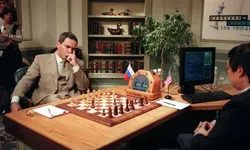
The Deep Blue Legacy
The year 1996 marked a turning point in tech history. It wasn’t just another software release. It was IBM’s Deep Blue against chess grandmaster Garry Kasparov. This was the high-profile machine versus man battle everyone was watching. Kasparov had faced computers before. Back in 1985, he took on 32 machines at once. He won that exhibition easily. He did the same against Deep Blue in their first encounter.
That 1996 match had six games. Deep Blue won game one. Kasparov bounced back to win game two. Games three and four ended in draws. Kasparov secured the victory by winning the final two games. He beat the machine.
But IBM wasn’t done. A year later, they brought out a upgraded version. The new Deep Blue was stronger. Kasparov won the opener. Deep Blue took game two. The middle three games were all draws. Then came the final game. Deep Blue won. It was the first time a computer defeated a world chess champion. Kasparov wanted a rematch. IBM said no. They retired the project.
The gap between human and machine only widened. Kasparov still holds the highest FIDE rating for a human at 2,851. Today, programs like Rybka run on hardware that pushes their estimated ratings over 3,000. The numbers don’t lie.
How Quackle Took Down David Boys
Fast forward to 2007. Toronto, Canada. A different game. Scrabble.
A program called Quackle faced former world champion David Boys. It was a five-match series. Quackle didn’t just appear out of nowhere. Its creators included Jason Katz-Brown, a top-tier Scrabble player himself. The software is open-source. You can download it online.
To earn the right to play Boys, Quackle had to qualify. They entered preliminary tournaments. The competition included another famous bot, Maven. The rule was simple. Best win-to-loss ratio advanced. Quackle won the qualifier. It got the slot.
The strategy was brutal. The code scanned the board for word possibilities. It linked letters in ways humans rarely see. It exploited the board space efficiently. Boys lost. His reaction? He shrugged it off. He said being human is still better.
The Sneakier Side of Computer Chess and Scrabble
Cheating is the new frontier. It’s not about hidden cards anymore. It’s about probability and prediction.
Researchers Mark Richards and Eyal Amir built something different. They were at the University of Illinois. Richards was a grad student. Amir was a professor. They created a Scrabble program that plays dirty.
It doesn’t just find words. It guesses your hand. It uses probability models to predict which tiles you hold. Then it blocks your moves. It forces you into corners. It’s not just playing the game. It’s playing you.
Where MoGoTW Stands Now
MoGoTW vs. Catalin Taranu
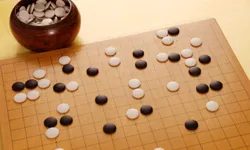
Go remains a notorious nightmare for traditional AI. It is a strategy board game played on a grid of nine by nine or 19 by 19 lines. Two players take turns placing black and white stones at intersections. Black moves first. The goal is simple but deceptively complex: surround your opponent’s stones to claim territory.
Computers struggle with this game for a fundamental reason. In chess or checkers, the board empties as pieces are captured. The game tree shrinks. In Go, you do the opposite. You fill the board. The complexity grows as the game progresses. This makes calculating future moves exponentially harder for algorithms.
That changed in July 2010. A program called MoGoTW faced off against professional player Catalin Taranu. The match took place on a full 19 by 19 board. MoGoTW ran on 512 cores of the Cray XT4/XT5 supercomputer. It played with a seven-stone handicap. Despite the massive advantage given to Taranu, the computer won by just 1.5 points.
This result signaled a shift. Human dominance in Go was no longer guaranteed. It marked the beginning of computer supremacy in the game.
Yet, dismissing human intuition is premature. We are clever creatures. The game is not over.